

(VAN) Reducing emissions not only helps agriculture adapt to climate change but also unlocks opportunities to boost produce value and access premium markets.
Profits rise before carbon credits
At the seminar “Carbon Credits and the Circular Economy in Sustainable Agricultural Development,” organized by the Viet Nam Farm and Agricultural Enterprises Association on the afternoon of June 11, experts noted that the most tangible benefits of low-emission agriculture today do not yet come from carbon credits. Instead, they stem from reduced production costs, increased farmer profits, and higher product value.
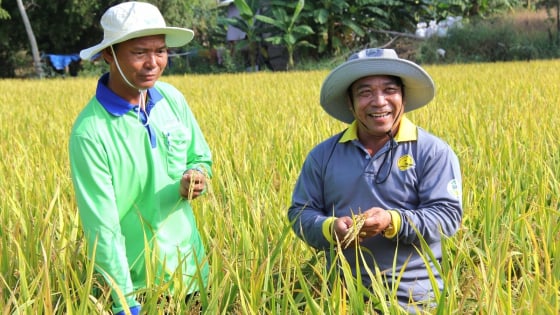
Farmers participating in the TRVC Project inspect their rice fields in Dong Thap Province. Photo: Le Hoang Vu.
Dr. Le Van Dung, Deputy Director of the An Giang Agricultural Extension Center, said that following the Prime Minister’s issuance of Decision No. 1490 approving the Project “Sustainable Development of One Million Hectares of High-Quality, Low-Emission Rice Associated with Green Growth in the Mekong Delta by 2030,” An Giang was among the first provinces to implement pilot models under the initiative.
During the 2024-2025 period, the province established 100 demonstration models across key rice-growing areas, covering a total area of more than 2,000 hectares. Results showed that seeding rates were reduced by approximately 47 percent, while farmers’ profits increased by an average of 32 percent, equivalent to between USD 137-149 per hectare. The models also demonstrated significant potential for reducing greenhouse gas emissions through the adoption of greener and more sustainable cultivation practices.
The benefits are not limited to An Giang. Low-emission rice production models across the Mekong Delta have also delivered promising results on a broader scale.
According to Dr. Tran Thu Ha, Director of the Transforming Rice Value Chains for Climate Resilient and Sustainable Development in the Mekong Delta (TRVC) Project, a green agricultural model can only achieve long-term sustainability if it simultaneously delivers economic, social, and environmental benefits. Among these, economic returns are the key factor motivating farmers to change their production practices.
After its first three cropping seasons, the TRVC Project expanded to nearly 59,000 hectares, engaging more than 20,000 farmers. All participating enterprises met the project’s objective of increasing farmers’ incomes, with average profit gains of approximately 51 percent.
One particularly noteworthy outcome is that the project achieved a cumulative reduction of more than 71,000 tonnes of CO₂-equivalent emissions over three production cycles. Although these reductions have not yet been converted into tradable carbon credits, they highlight the substantial potential of low-emission rice production systems.
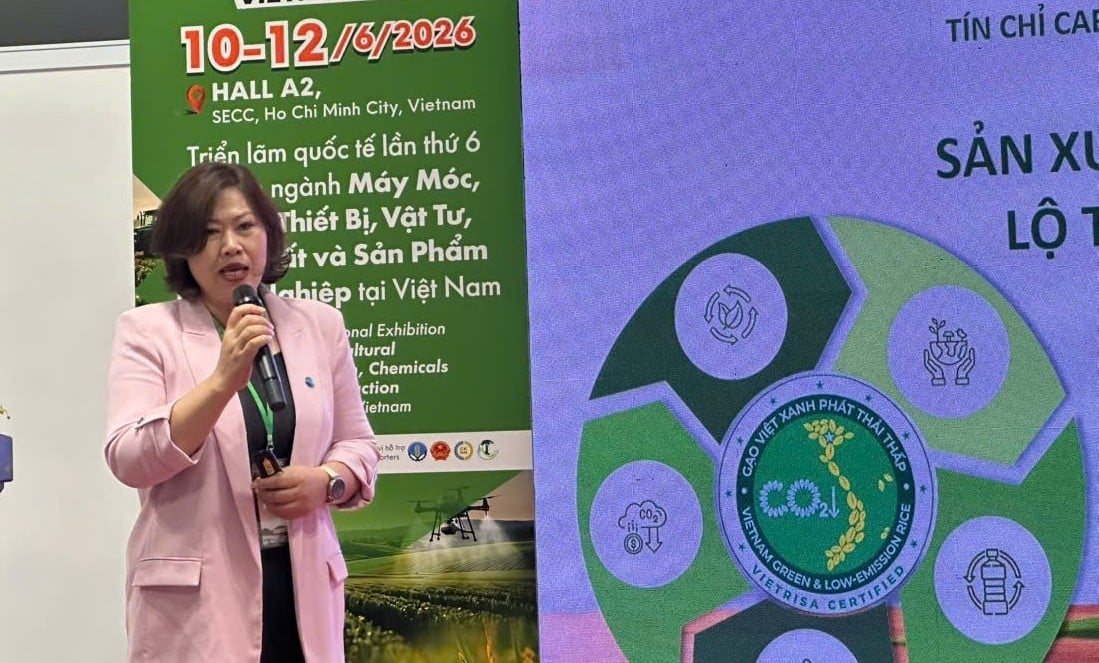
Dr. Tran Thu Ha, Director of the TRVC Project, said that all participating enterprises achieved the project’s target of increasing farmers’ profits, with average gains of around 51 percent. Photo: Ha Duyen.
Notably, all of the first 71,426 tonnes of rice certified under Viet Nam’s “Low-Emission Green Rice” label were produced by enterprises participating in the TRVC Project. Among them, the first shipment of green rice exported to Japan was sold at approximately USD 825 per tonne, significantly higher than prevailing market prices.
“These results demonstrate that the economic benefits of reducing seed use, lowering irrigation water consumption, cutting input costs, and improving product quality can be realized even before the agricultural carbon credit market is fully developed,” Dr. Ha emphasized.
When agricultural value extends beyond production volume
While the agricultural sector has traditionally competed on the basis of productivity and output, sustainability is increasingly a key determinant of the value of agricultural products in global markets.
According to Dr. Nguyen Hoang Minh Tam of the Institute for Public Policy & Rural Development, the transition toward greener agriculture is no longer a voluntary choice but a prerequisite for survival and competitiveness.
The pressure to transform comes from both climate change and market demands. As agriculture faces growing impacts from extreme weather events, consumers and importers are also raising expectations for products that are produced through sustainable and environmentally responsible practices.
However, Dr. Tam noted that one common misconception is the belief that reducing emissions automatically generates carbon credits.
He explained that carbon credits are a specialized asset that can only be created through a rigorous process involving measurement, reporting, validation, independent verification, and registration under internationally recognized standards. As a result, the challenge today extends beyond reducing emissions; it also requires addressing issues related to data management, ownership rights, benefit-sharing mechanisms, and trading frameworks.
According to Dr. Tam, Viet Nam’s agricultural sector currently emits approximately 100 million tonnes of CO₂ equivalent annually, accounting for nearly 30 percent of the country’s total greenhouse gas emissions. Among agricultural subsectors, rice cultivation offers the greatest potential for emissions reduction. Nevertheless, challenges such as fragmented production, limited production data, traditional farming practices, and the absence of a fully developed emissions monitoring system remain significant obstacles to the development of a carbon market in agriculture.
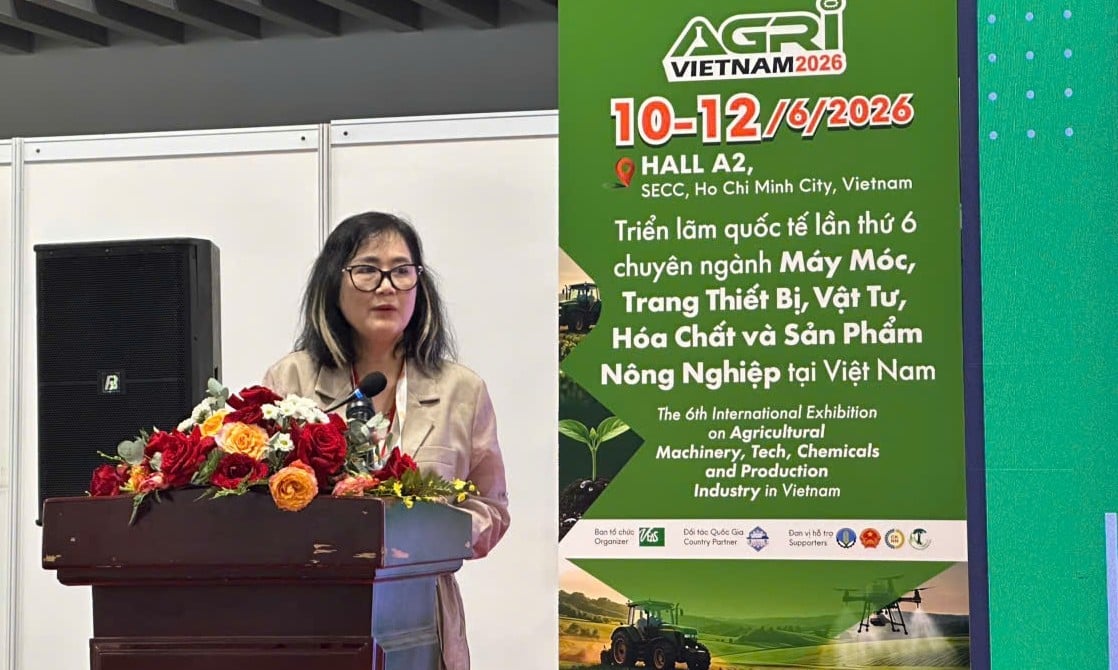
Dr. Ha Thuy Hanh believes that carbon credits can serve as a catalyst for strengthening value chain linkages and unlocking access to climate finance. Photo: Ha Duyen.
From a market perspective, Dr. Ha Thuy Hanh, Vice Chairwoman of the Viet Nam Farm and Agricultural Enterprises Association, emphasized that carbon credits are more than just a tradable commodity. They can act as a catalyst for deeper value chain integration and create opportunities to access climate finance resources.
According to Dr. Hanh, farmers could eventually benefit from a “double income” stream, earning higher returns from premium agricultural products while also gaining access to future carbon-related incentive programs. At the same time, businesses would have greater opportunities to build sustainable brands, enter high-standard markets such as Europe and the United States, and access green financing.
To accelerate and broaden the green transition, Dr. Hanh stressed the increasingly important role of industry associations and intermediary organizations. These entities not only facilitate the transfer of knowledge and technical expertise to farmers but also help connect businesses, cooperatives, experts, and government agencies across the entire value chain.
According to the experts, the current transition is not simply about reducing greenhouse gas emissions. It also represents a shift from a production-oriented mindset focused on output volume toward one centered on value creation. As export markets place greater emphasis on sustainability, low-emission production is gradually emerging as a new competitive advantage, enabling Vietnamese agricultural products to enter higher-value market segments.
Agriculture News | Agri Products Price