


(VAN) From seed varieties and growing regions to logistics and market access, building a complete value chain is becoming the key for Vietnamese agricultural products to increase their value and expand exports.
Competing on more than just the product
At a workshop titled “Strengthening a Competitive and Market-Oriented Agricultural Export System,” organized by the United Nations Industrial Development Organization (UNIDO) and the Viet Nam Institute of Agricultural Engineering and Post-Harvest Technology (VIAEP) on the afternoon of June 10, Nguyen Duc Long, Director of VIAEP, said that the competitive advantages of Vietnamese agricultural products are shifting. While output volume and price used to be the most important factors, the market is now placing growing emphasis on quality, sustainability, traceability, and the overall completeness of the supply chain.
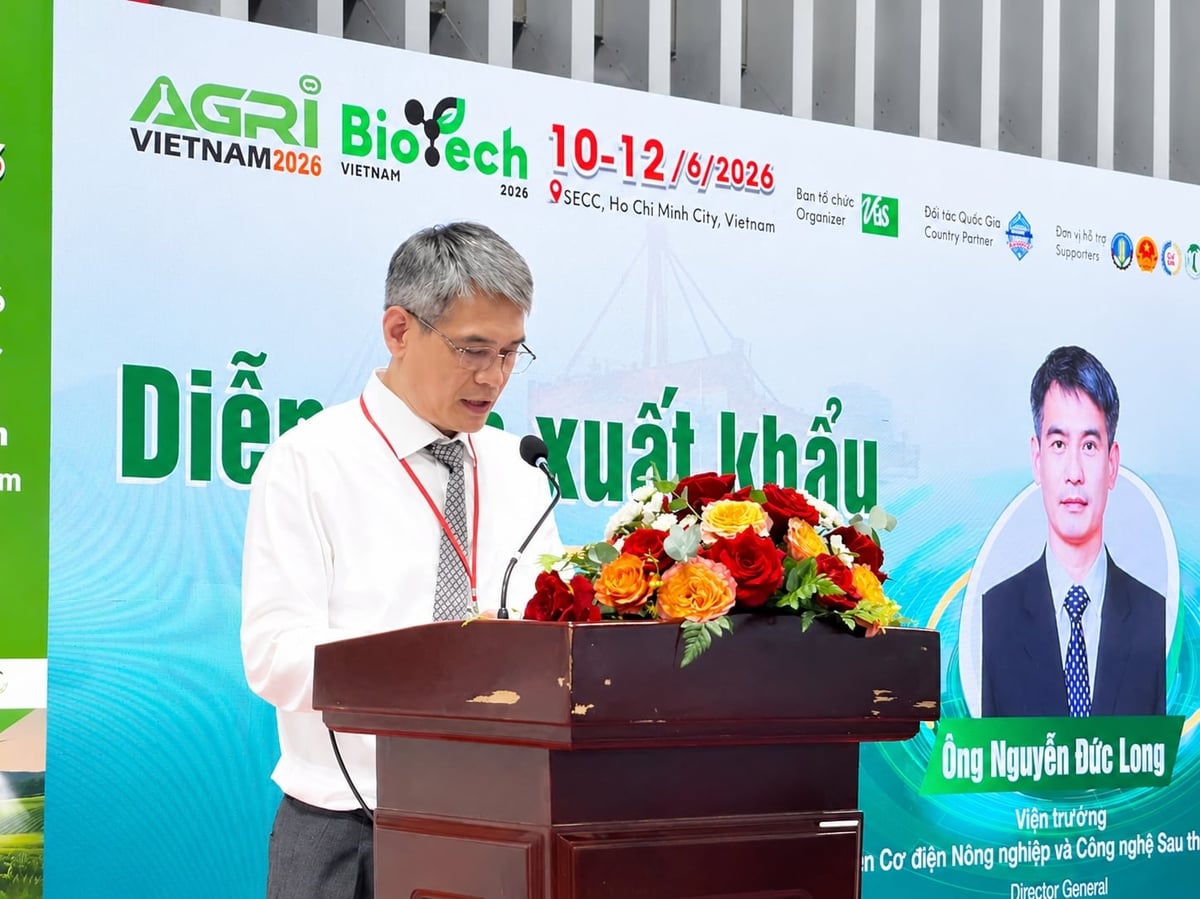
Nguyen Duc Long, Director of the Vietnam Institute of Agricultural Engineering and Post-Harvest Technology, says the competitive advantages of Vietnamese agricultural products are shifting. Photo: Ha Duyen.
Long said importers today are no longer evaluating only the final product but also the entire system that produces it. This, he noted, is why the agricultural sector is gradually shifting from growth based on output volume to growth based on value, from selling raw materials to developing processed products, and from cost-based competition to competition based on quality, branding, and the ability to meet market demand.
Drawing on practical experience in production and export, Nguyen Thi Lan Huong, Chairwoman of Viet Phuc Group, said her company has clearly observed this shift when bringing bananas to the Chinese market. According to Huong, a Vietnamese banana is not very different from a Philippine one, but the value of the product is determined by factors behind the scenes, such as the variety planted, branding, logistics, supply stability, and the overall maturity of the production chain.
She noted that consumers today are not only buying a product but are also concerned about whether it was produced sustainably, whether it is good for their health, and whether it is environmentally friendly, adding that selling goods now means selling trust as well.
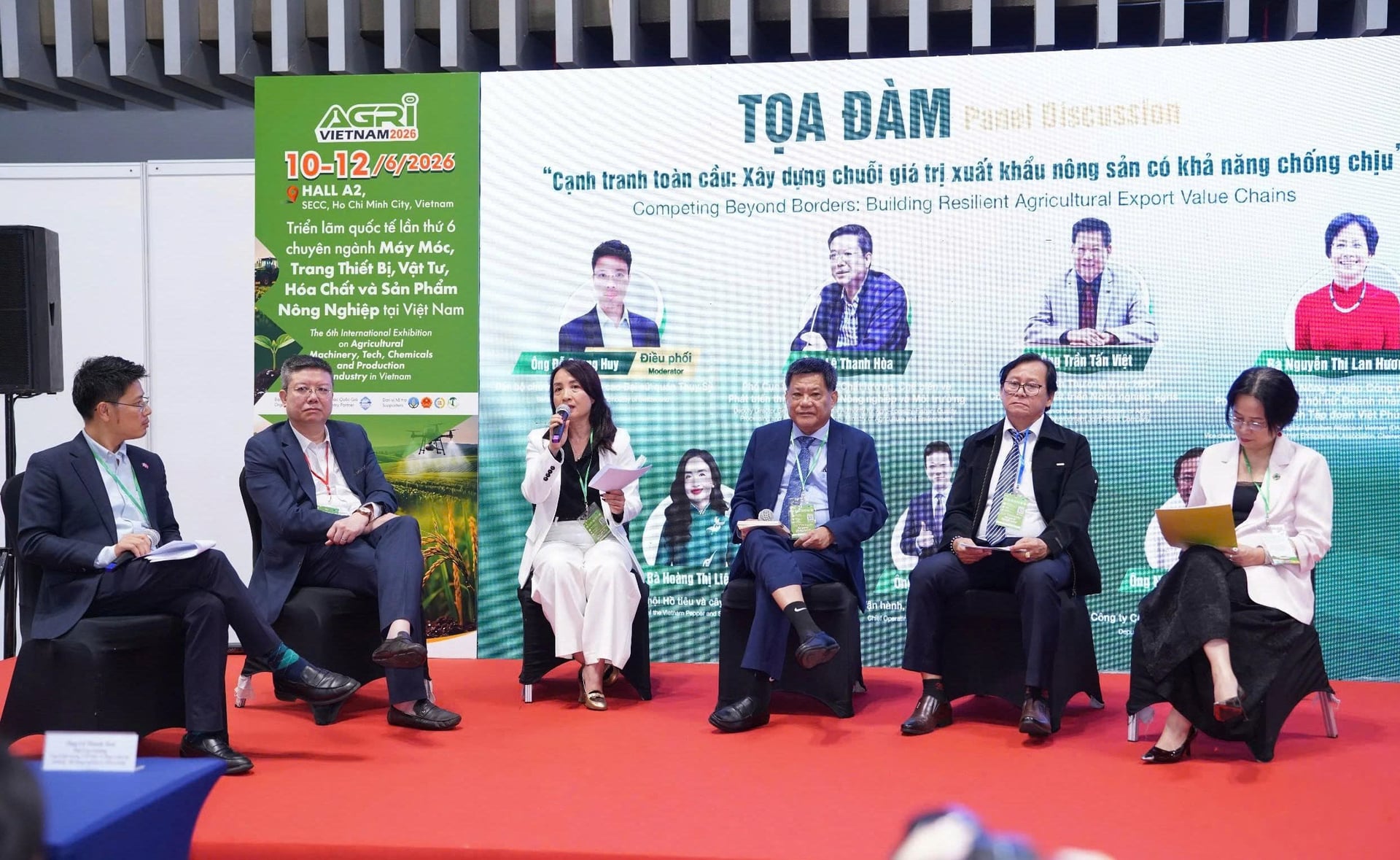
Speakers agreed that building a complete value chain is the key for Vietnamese agricultural products to increase their value and expand exports. Photo: Ha Duyen.
According to Huong, this is why companies need to invest from the ground up, starting with seed varieties, growing regions, cultivation processes, and the application of science and technology. Variety selection must also be aligned with market demand and the requirements of the logistics chain. For bananas, she noted, not every high-yield variety is suitable for export.
Value created throughout the entire export journey
According to Nguyen Quang Thanh, Deputy Director of Hoang Ha Logistics Joint Stock Company, alongside investment in production, logistics is another critical link in the chain. Thanh said the quality of agricultural products is not determined solely at the growing area but must also be maintained throughout storage, transport, and distribution.
For fresh fruit in particular, quality is the decisive factor in maintaining and expanding export markets, he said, but that quality can only be preserved if post-harvest stages are organized in a coordinated way.
He compared harvested fruit to a newborn baby that needs gentle handling and care. Just as a mother cares for an infant, logistics plays that role for fruit, he said, noting that without proper handling during storage and transport, product quality declines quickly. He stressed that logistics is no longer simply a transport service but has become an integral part of the export value chain, a point he said is especially important as importing markets continue to tighten quality and food safety standards.
Sharing this view, Hoang Mai Van Anh, UNIDO National Coordinator in Viet Nam, said that success in agricultural exports today is no longer determined by an individual product but by the capacity of the entire value chain. She said the value chain only creates a real competitive advantage when production, harvesting, storage, logistics, and market access are effectively linked together, helping to improve quality, increase value, and better meet the requirements of international markets.
Agriculture News | Agri Products Price