

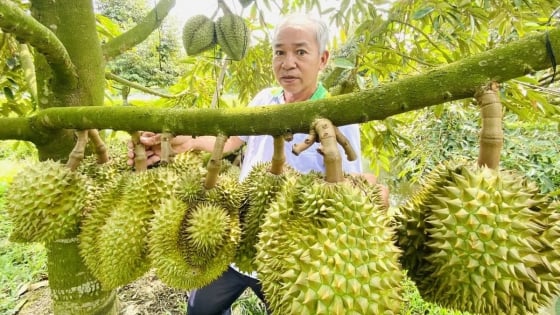
(VAN) In April, durian export turnover increased by approximately 2.5 times over the same period in 2025, despite still being at the beginning of the harvest.
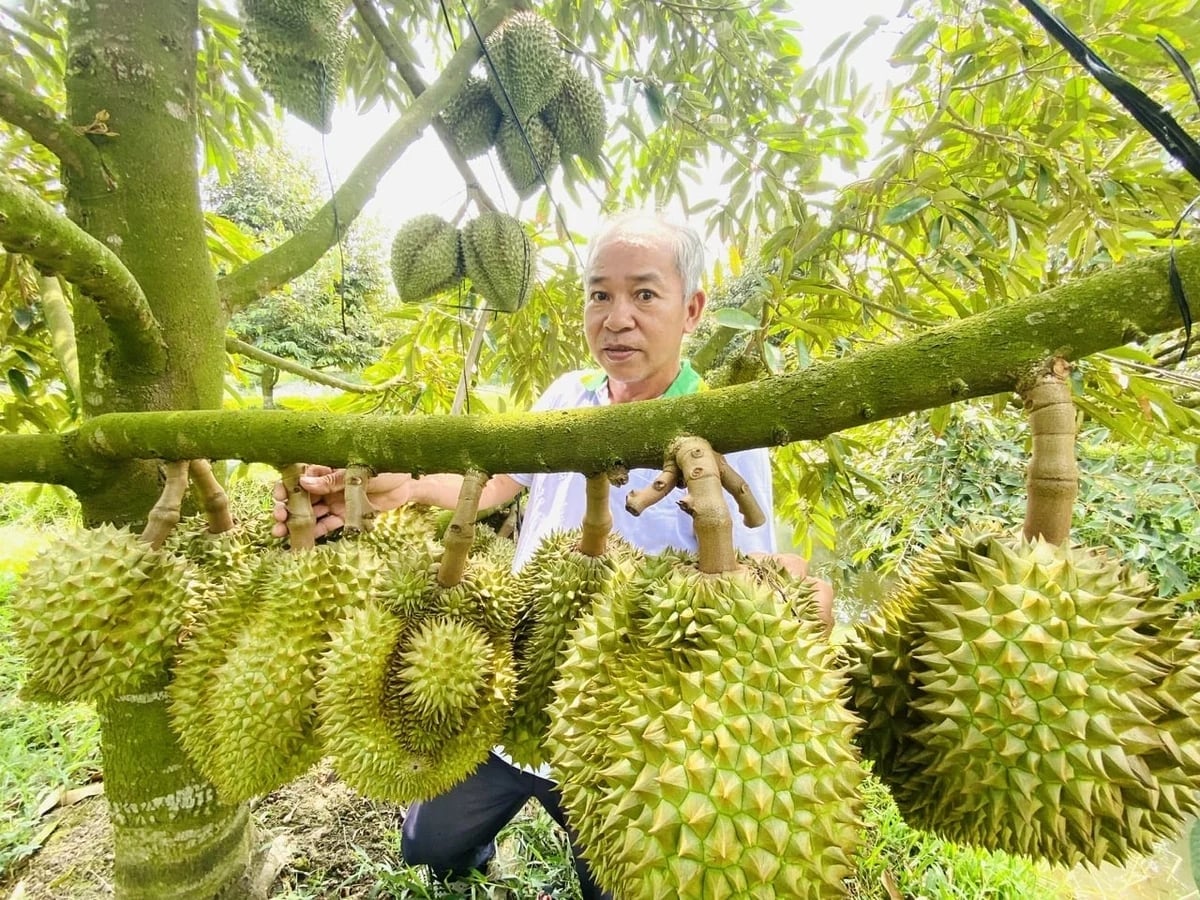
Vietnam’s durian industry is aiming for $4 billion in exports in 2026. Photo: Le Hoang Vu.
A billion-dollar industry overcoming the “information storm”
Since early May 2026, the durian market has been flooded with negative news about cadmium contamination, border-gate congestion, and sharply falling purchase prices. Many growers in the Central Highlands and the Mekong Delta became worried, as this was considered the first major media crisis since Vietnamese durian was officially exported to China through official channels in 2022.
Anxiety spread rapidly on social media, accompanied by speculation that “the market was closing,” “China was tightening imports,” or “Vietnamese durian was losing credibility.” However, when examining the actual data more carefully, the overall picture of the durian industry appears far more positive than public opinion suggests.
According to the Plant Production and Protection Department (PPPD-MAE), Cadmium issues have only appeared sporadically in a few isolated regions, while most major production areas such as Dak Lak, Dak Nong, Lam Dong, and many areas in Southeast and Southwest Viet Nam continue meeting food safety requirements for export markets.
Border congestion mainly occurred during peak harvest season and was due to the implementation of additional food safety testing requirements imposed by Chinese customs authorities. This reflects changes in procedural and export requirements, not signs that Vietnamese durian has been “blocked” or has lost access to the market. Customs clearance operations have continued steadily, averaging about 100 trucks per day and reaching up to 400 during peak periods.
More importantly, the market quickly showed signs of recovery. Purchasing prices in many localities rebounded by VND 5,000-10,000/kg compared to previous low periods.
If one only looked at social media, it might seem the durian industry was in crisis. But export figures tell an entirely different story.
According to agricultural sector data, durian exports in the first quarter of 2026 reached approximately $ 222 million, a remarkable increase of 230% compared to the same period last year. In April alone, export turnover increased about 2.5 times compared to April 2025.
The biggest growth driver comes not only from fresh durian but also from the rapid expansion of frozen durian, which is emerging as a new growth engine for the industry.
“Unlike fresh durian, which depends heavily on seasonality and fast customs clearance, frozen durian extends shelf life, reduces logistics pressure, and expands access to more distant markets. It is also a higher value-added segment that aligns with modern consumption trends in many countries,” the PPPD stated.
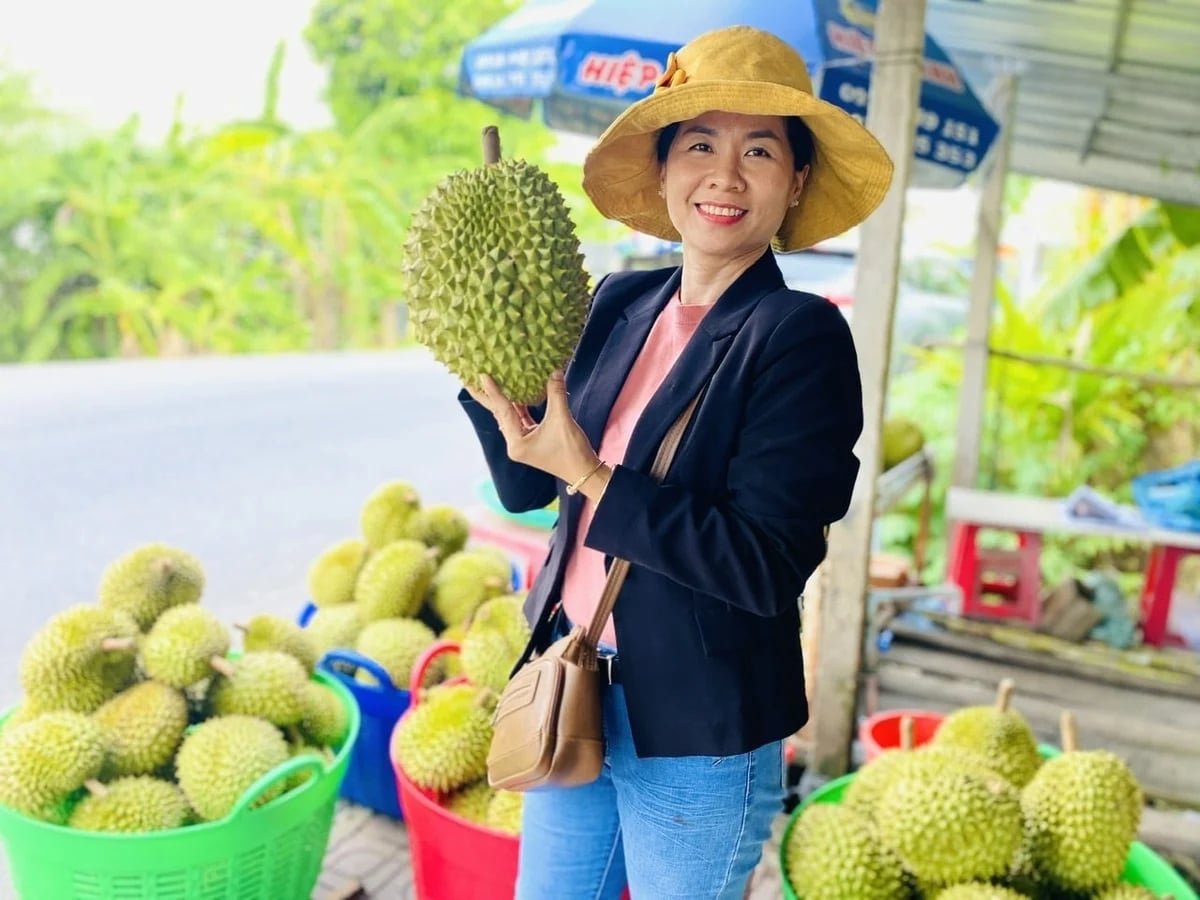
Durian prices have recently recovered strongly. Photo: Le Hoang Vu.
Moving toward a $4 billion export target
The year 2026 is considered an important milestone as Viet Nam actively completes technical requirements to prepare for entering the India market from July onward. With a population of over 1.4 billion people and a rapidly growing middle class, India is considered one of the most promising markets for tropical fruits in the coming decade.
Market expansion not only reduces dependence on a single market but also creates room for Viet Nam’s durian industry to pursue an export target exceeding $4 billion this year. While growth between 2022 and 2024 mainly came from market openings and the expansion of cultivation areas, the story has changed significantly since 2025.
Viet Nam’s agricultural sector is now shifting strongly from a production-volume mindset toward a quality-focused approach. The management of planting area codes, packing facilities, and traceability systems is being tightened more than ever before.
Many localities have begun reviewing production areas, strengthening monitoring of fertilizer and pesticide use, and requiring detailed farming logs. Numerous exporters are also moving away from scattered purchasing models toward establishing supply-chain partnerships with farmers to directly control quality at the orchards.
Notably, pressures from importing markets are becoming a driving force pushing the industry to mature more rapidly. An exporter in Dak Lak commented:
“In the past, many people only cared about selling products. Now, if we want to go the distance, we must prove quality, ensure transparent production processes, and maintain credibility with customers.”
Reality shows that as market standards continue to rise, competitive advantages will no longer belong to businesses chasing quantity but rather to companies and growing regions capable of maintaining consistent quality control.
The PPPD affirmed that Viet Nam’s durian industry is moving beyond its period of rapid expansion and entering a more systematic and sustainable development cycle. Recent technical warnings are real challenges, but also necessary tests for a billion-dollar industry integrating deeply into international markets.
The encouraging sign is that, despite short-term volatility, the market continues to show strong confidence in Vietnamese durian. Prices are recovering, exports are rising sharply, markets continue expanding, and production chains are being standardized more rapidly.
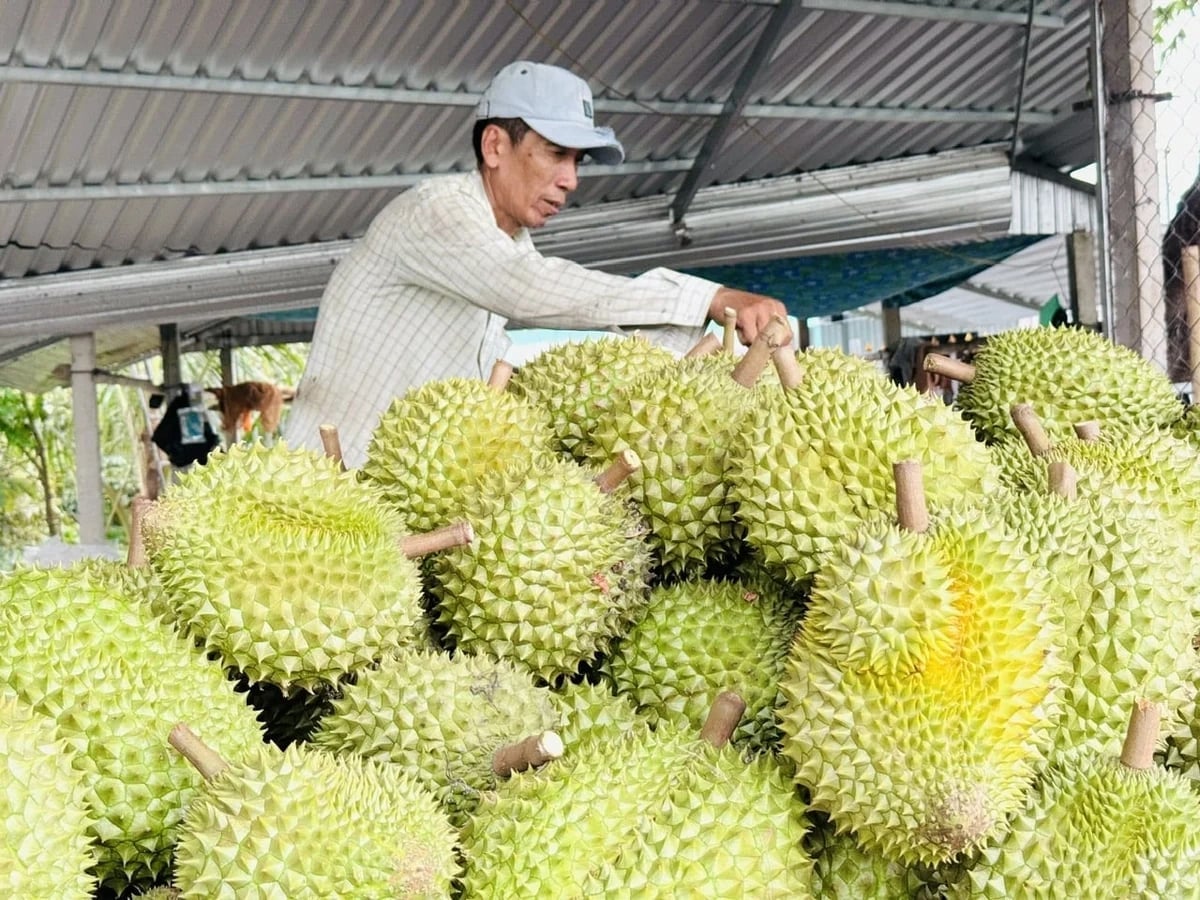
Viet Nam’s durian industry has demonstrated the strength of a billion-dollar sector by standing firm through the information storm. Photo: Le Hoang Vu.
Along this journey, what matters most may not be production volume or selling prices alone, but confidence in the quality of Vietnamese agricultural products. Sometimes, misinformation can cause even greater harm than Cadmium itself. In that context, accurate information is the most important weapon for protecting farmers, businesses, and the reputation of Viet Nam’s durian industry on the global market.
Markets are buying the entire durian production process
Durian exports are no longer simply about selling agricultural products, they are about selling market confidence in the quality and management capability of the entire production chain.
To support durian export activities, Viet Nam currently has around 20 Cadmium testing laboratories and 16 Auramine O testing laboratories approved by Chinese authorities. In the near future, these numbers are expected to increase as new laboratories complete technical capacity requirements and evaluation procedures.
However, during peak harvest periods, current testing capacity still remains limited compared to actual business demand. This is also one of the reasons why testing wait times sometimes become prolonged, creating pressure on customs clearance operations at border gates.
Notably, rather than avoiding these challenges, the agricultural sector is proactively acknowledging these limitations and gradually expanding the laboratory system, standardizing sampling procedures, strengthening monitoring, and improving quality control capacity throughout the entire production and export chain.
Agriculture News | Agri Products Price