

(VAN) A growing-zone registration code is now the essential credential that earns a Vietnamese durian a place on supermarket shelves in Shanghai or Guangzhou.
‘Passport’ of the production area
Behind every container of durian bound for China, or poised to enter the Indian market li,es far more than a story about yields and selling prices. It represents an entire system of controls spanning growing-zone registration codes, supply-chain traceability, and food-safety testing. As importing markets tighten their standards, Viet Nam’s durian industry is entering a new phase of development: one defined by transparency, professionalism, and long-term sustainability.
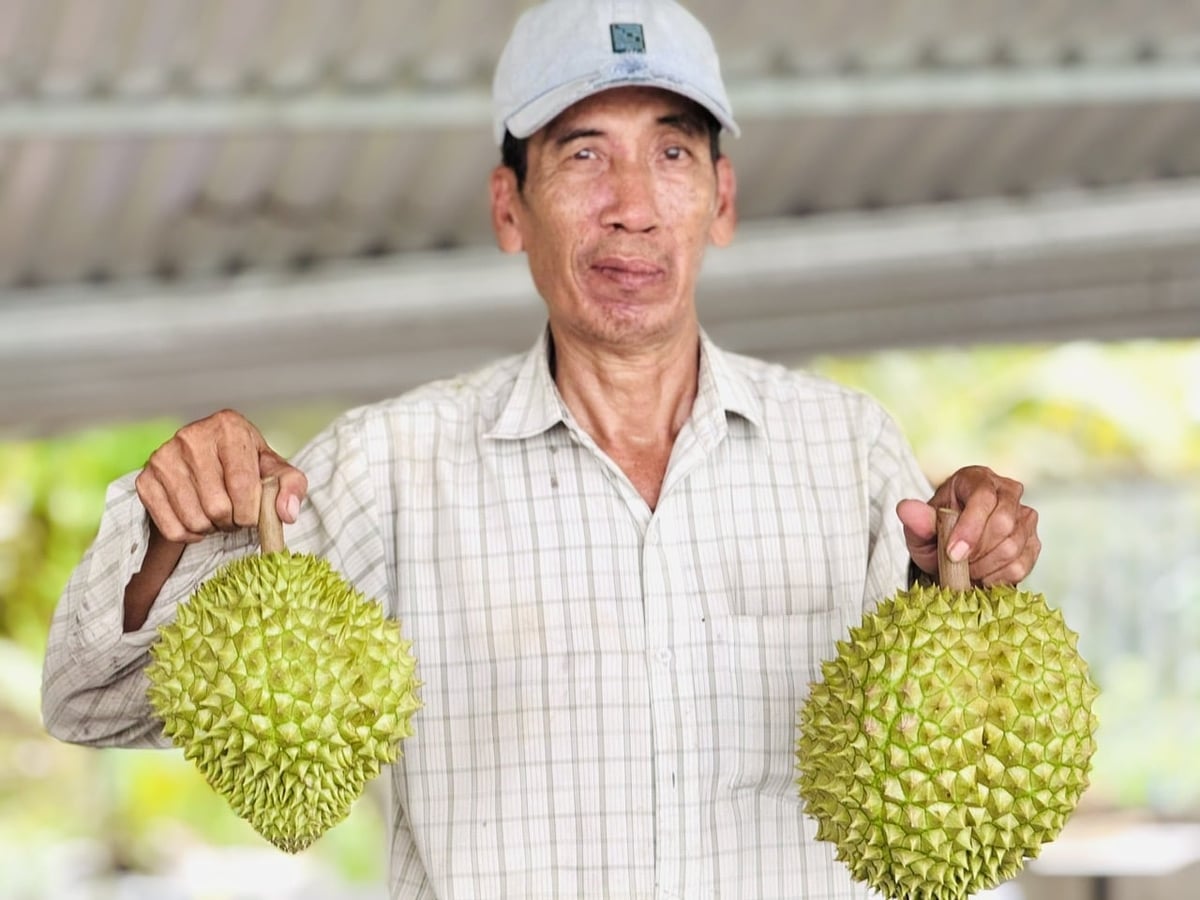
The growing-zone registration code is the ‘green card’ that allows Vietnamese agricultural produce to enter the world. Photo: Le Hoang Vu.
Before a Vietnamese durian can reach a supermarket shelf in Shanghai or Guangzhou, the first requirement is not a trading partner or a refrigerated container. It is a registered growing-zone code.
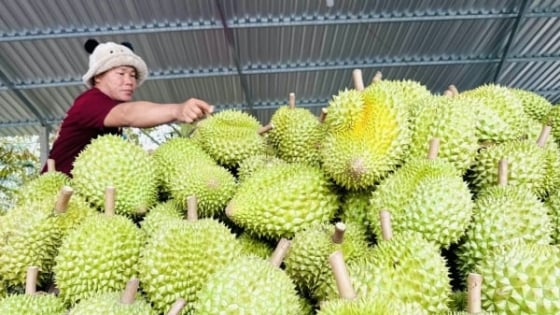
Nationwide, approximately 1,168 such codes and 85 approved durian packing facilities are now in place to serve the export market. Lam Dong province alone accounts for more than 300 of those codes, a figure that reflects how rapidly standardization of the raw-material supply base is advancing in that region.
The Plant Production and Protection Department describes the growing-zone code, in the context of modern agricultural trade, as the equivalent of an identity document for a production area. Through that code, importing authorities can determine where a given durian was grown, who produced it, which cultivation practices were applied, and whether the fruit meets applicable food-safety requirements.
Obtaining a code is not straightforward. A growing zone must satisfy a rigorous set of criteria covering farm records, pest management, proper use of crop-protection chemicals, hygiene conditions, and traceability protocols, and must receive formal approval from the importing country. Nor is the credential permanent. A single shipment found to be in violation can result in a code being suspended or revoked outright, which means the loss of export authorization entirely.
Public perception still tends to picture durian exports as a simple sequence: harvest, load a container, cross the border. The reality today is considerably more demanding. The journey of a shipment from an approved growing zone now encompasses not only cultivation and post-harvest handling procedures, but also laboratory testing for food-safety parameters, most notably cadmium and Sudan Yellow (also known as auramine O), two substances that Chinese authorities have monitored with particular intensity since 2024.
Exporting durian is no longer simply a matter of selling an agricultural commodity. It has become, in effect, a matter of selling the market’s confidence in the quality and traceability of an entire production chain.
To support durian export operations, Viet Nam currently has approximately 20 Chinese-approved laboratories capable of testing for cadmium and 16 approved to test for Sudan Yellow. That number is expected to grow as additional facilities complete their technical accreditation and satisfy Chinese evaluation requirements.
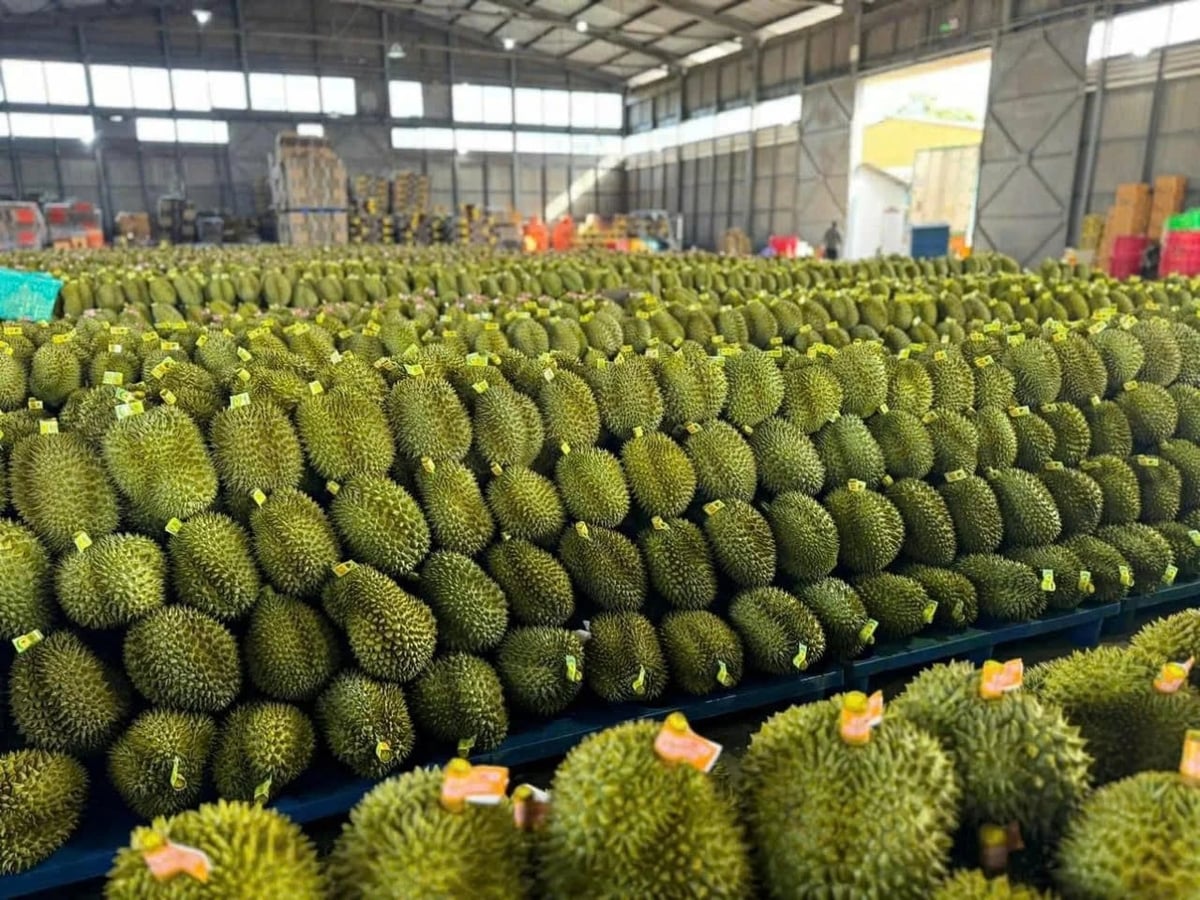
The agriculture sector is expanding its testing laboratory network to meet export demand. Photo: Tran Tho.
During peak harvest periods, however, existing testing capacity falls short of actual industry demand. That gap is among the factors that have periodically extended testing wait times, creating pressure on customs clearance at border crossings.
What is notable is that rather than sidestepping these constraints, the agriculture sector is confronting them directly – gradually expanding the laboratory network, standardizing sampling procedures, strengthening oversight, and building quality-control capacity across the full production and export chain.
‘Green card’ for export
Within the broader durian landscape, Lam Dong is emerging as a standout example. The province benefits not only from a climate and sloping terrain that naturally limit cadmium accumulation in the soil, but also from a growing concentration of production areas certified under VietGAP and GlobalGAP standards.
Many farmers there have fundamentally changed their approach to cultivation, maintaining production logs, controlling fertilizer inputs, following recommended guidelines for crop-protection chemicals, and proactively forming partnerships with export companies.
As growers in the province have found, the hardest part of sustaining safety-standard production is not technical know-how but consistency. Following the correct procedures from the outset may be more demanding and more costly at first, but stability increases over time. When markets raise their standards, those who operate systematically are the ones who gain a competitive edge.
The rapid expansion of the durian industry in recent years led many to assume that simply having supply was sufficient to access export markets. The market, however, is shifting quickly. Today, a single non-compliant shipment can trigger a cascade of consequences, returned goods, suspended clearance, revocation of a growing-zone code, and lasting damage to the reputation of an entire production region.
Each growing-zone code is, in practice, far more than an administrative string of characters. It is the green card that allows Vietnamese agricultural produce to enter the world on the strength of quality and credibility.
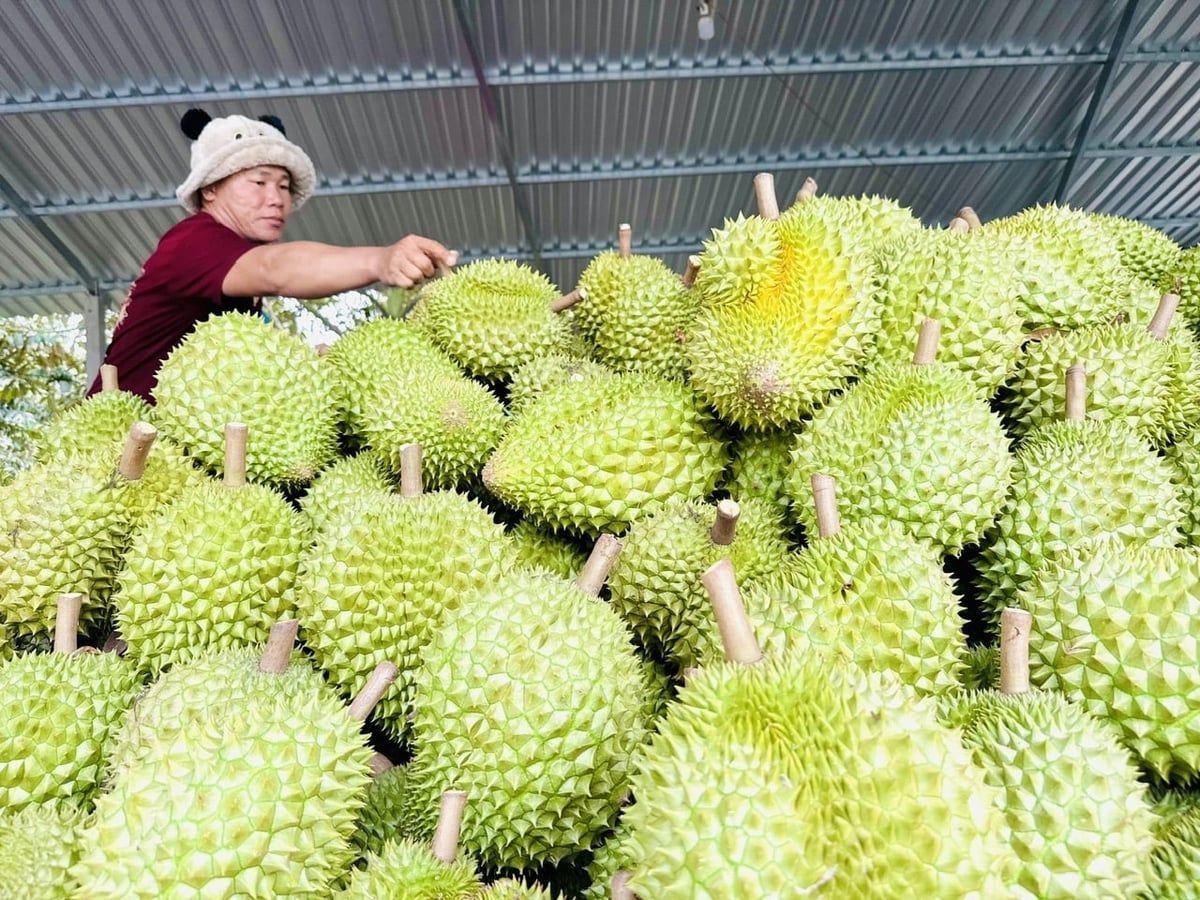
The agriculture sector is making a strong shift from a quantity mindset to a quality mindset. Photo: Le Hoang Vu
The Plant Production and Protection Department affirms that the agriculture sector is firmly shifting its orientation from volume to quality. Viewed over the long term, this may prove to be the most consequential transition in Vietnam’s durian industry since the fruit gained official export status. In today’s global competition, what determines success is no longer yield alone or competitive pricing, but the capacity for transparency, traceability, and sustained market trust.
từ khi được xuất khẩu chính ngạch. Bởi trong cuộc cạnh tranh toàn cầu hiện nay, thứ quyết định không chỉ là sản lượng hay giá rẻ mà là khả năng minh bạch, truy xuất và duy trì niềm tin thị trường.
Agriculture News | Agri Products Price