



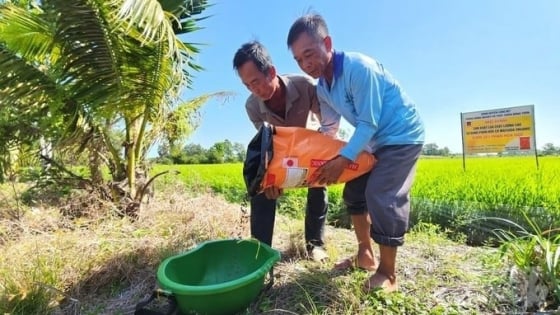
(VAN) Applying more fertilizer does not necessarily result in higher rice yields. The decisive factor is improving nutrient use efficiency in order to reduce production costs while maintaining productivity.
Data from the International Rice Research Institute (IRRI) showed that rice yields tend to saturate when nitrogen application reaches around 70–100 kg/ha. However, many farmers still apply 100–200 kg/ha. This means that a portion of the fertilizer does not contribute to additional grain production, while still increasing production costs and greenhouse gas emissions. Therefore, the challenge in rice production is no longer about how many kilograms of fertilizer to reduce but about how each kilogram can generate greater value.
This message is also consistently reflected in research and practical models implemented by IRRI in the Red River Delta within the framework of the “Fertilize Right” project, as presented at a forum and showcase themed “Fertilize Right Solutions for High-Efficiency, Low-Emission Rice Cultivation” held on June 30.
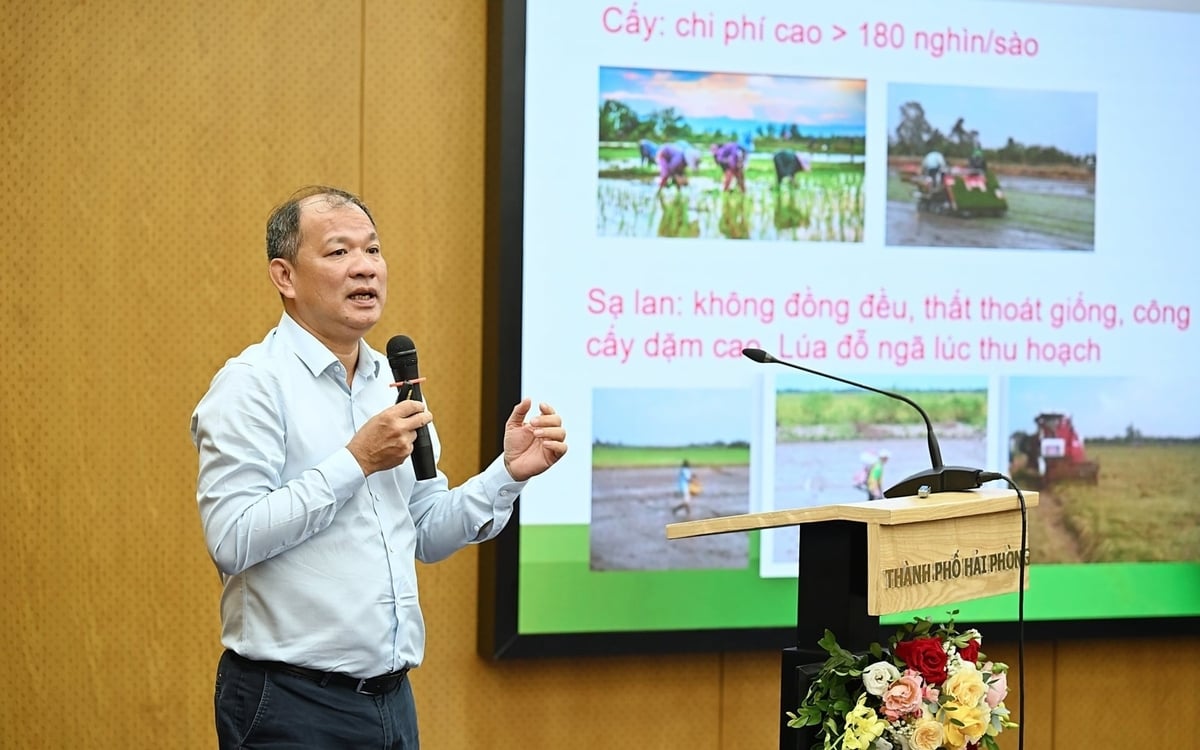
Assoc. Prof. Dr. Nguyen Van Hung, senior expert at IRRI. Photo: Bao Thang.
Nutrient efficiency is more important than fertilizer quantity
According to Assoc. Prof. Dr. Nguyen Van Hung, a senior expert at IRRI, reported that a 2024 survey of 10,000 rice-farming households in the Mekong Delta showed that fertilizers account for about 30% of total cultivation costs. As fertilizer prices rise, this expense continues to place significant pressure on farmers, even causing many households to operate at a loss.
Beyond high costs, fertilizer use efficiency still has considerable room for improvement. IRRI’s data show that nitrogen application by farmers currently ranges from 50 kg/ha to 200 kg/ha. However, large-scale data analysis indicates that yields only increase at a threshold of around 70–100 kg of nitrogen/ha, after which they remain largely unchanged. In other words, applying more fertilizer does not necessarily result in higher rice yields while increasing costs, nutrient losses, and greenhouse gas emissions.
Mr. Hung noted that nutrient use efficiency depends not only on fertilizer quantity but also on soil conditions, crop varieties, planting seasons, water management, seeding rates, and rice straw management practices. Therefore, the traditional mindset of “applying more to be safe” needs to be replaced with data-driven nutrient management.
One of the key foundations of this new approach is the development of a soil–nutrient map at a spatial resolution of 30×30 m using machine learning technologies. The system integrates information on pH, organic matter, nitrogen, phosphorus, potassium, silicon, and zinc, along with soil texture characteristics, to provide fertilizer recommendations tailored to specific zones, rather than applying a uniform formula across all fields.
In parallel, IRRI is developing a digital agricultural extension platform that integrates site-specific nutrient management, an AI chatbot, and supply chain linkage tools, enabling farmers to access technical recommendations directly on their smartphones. The ultimate goal is to shift from experience-based farming to data-driven decision-making.
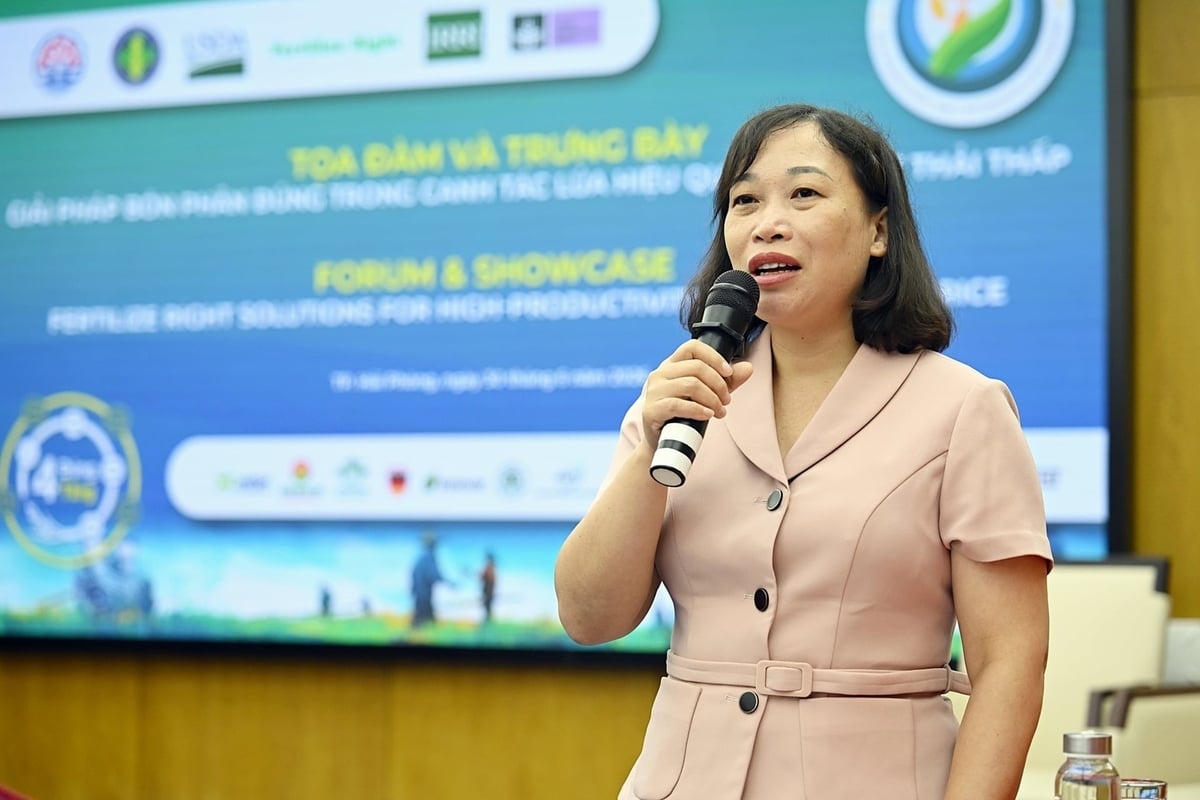
Ms. Luong Thi Kiem, Deputy Director of the Hai Phong Department of Agriculture and Environment. Photo: Bao Thang.
Delivering fertilizer to the right place rather than applying more
If data provides the foundation for “Fertilize Right,” then sowing combined with deep fertilizer placement is the solution that puts this principle into practice. Assoc. Prof. Dr. Nguyen Van Hung said that, unlike traditional methods, the pneumatic sowing machine places seeds approximately 1–2 mm below the soil surface while simultaneously placing fertilizer at a depth of around 5–6 cm, directly beneath the root zone. As a result, seeds are less likely to be washed away by rain, roots gain earlier access to nutrients, and fertilizer losses are reduced while nutrient absorption becomes more efficient.
The machine also creates alternating wide and narrow row spacing, allowing more sunlight and oxygen to penetrate the crop canopy, thereby improving photosynthesis, suppressing pests and diseases, and reducing the risk of lodging. Results from the Mekong Delta show that pesticide use can be reduced by 20–30% thanks to better field aeration.
During the 2026 spring crop, demonstrations in Hung Yen, Hai Phong, and Ninh Binh showed that the technology not only replaced manual transplanting but also significantly reduced production costs. According to IRRI, traditional rice transplanting costs around VND 10 million/ha, while sowing combined with deep fertilizer placement costs only about VND 1.5 million/ha.
Results from the field demonstrate that the effectiveness of “Fertilize Right” lies not only in reducing fertilizer use, but also in improving the economic efficiency for rice farmers.
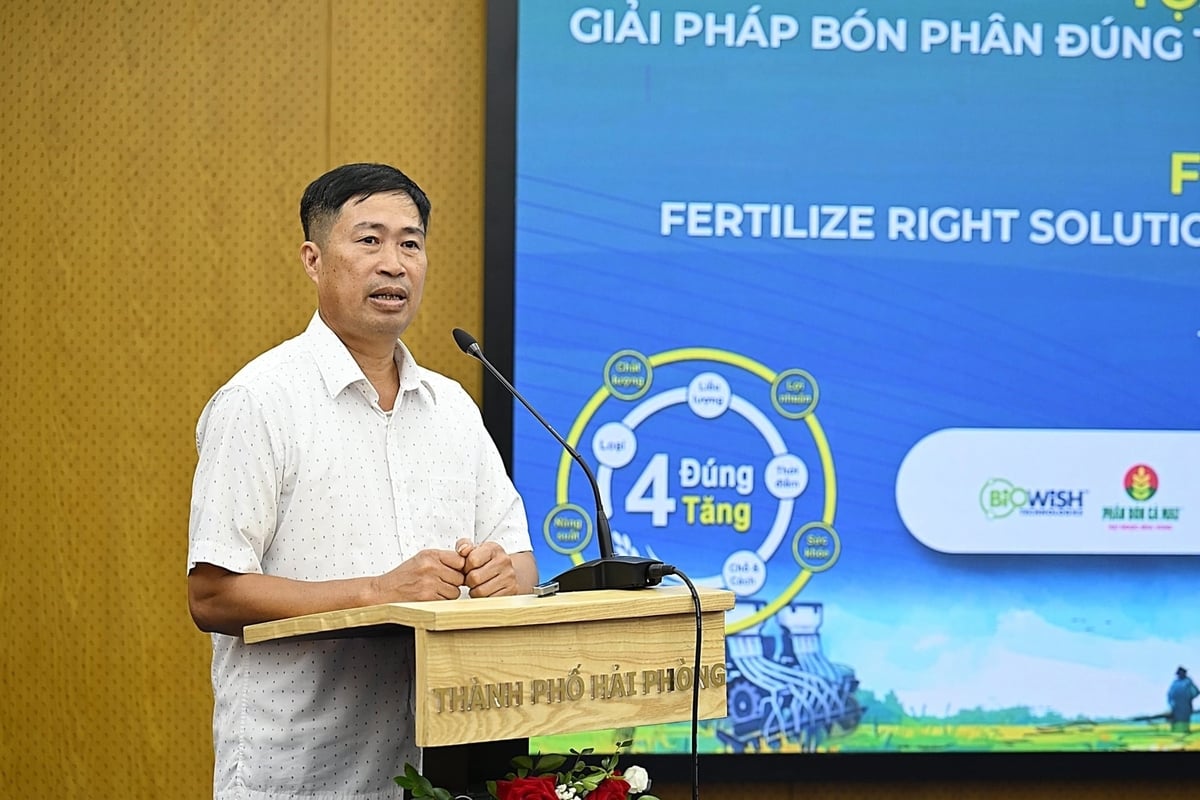
Mr. Nguyen Van Du, Director of Nam Cuong Cooperative (Ninh Binh). Photo: Bao Thang.
Mr. Nguyen Van Khien, Chairman of the Tan An Commune Farmers’ Association in Hai Phong, said that farmers previously applied 15–16 kg of fertilizer/sao. However, under the sowing and deep fertilizer placement model, fertilizer use has fallen to around 10 kg/sao, while yields remain at 0.27–0.28 tons of dried paddy/sao, higher than conventional farming methods. According to him, the model increases profits by about VND 500,000/sao.
If economic efficiency is the factor that persuades farmers to adopt a new model, then changes in mindset ultimately determine the ability to replicate it. Mr. Nguyen Van Du, Director of Nam Cuong Cooperative in Ninh Binh, said the biggest surprise for local farmers was not the sowing machine itself but the fact that rice could thrive with a single fertilizer application using about 40% less fertilizer than traditional practices. After just one crop season, many farmers began proactively requesting that the model be scaled up.
“The results are not the product of a single technique but of synchronous integration combining sowing with deep fertilizer placement, alternate wetting and drying (AWD), integrated pest management (IPM), and the use of post-harvest rice straw to produce organic fertilizer,” said Ms. Dong Thi Phuong at the Hung Yen Sub-Department of Crop Production and Plant Protection.
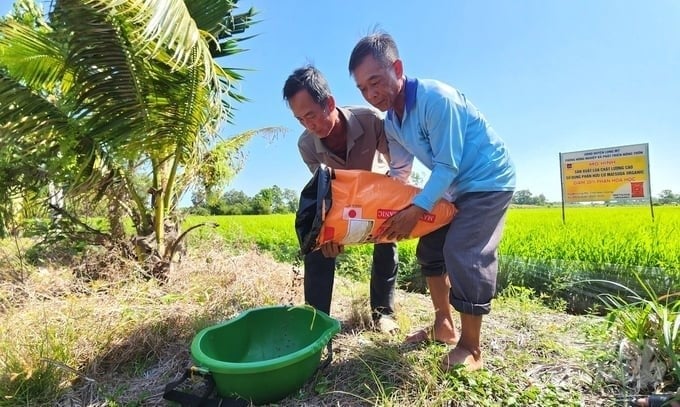
Rice yields tend to saturate when nitrogen application reaches around 70–100 kg/ha. Photo: Kim Anh.
“Reducing emissions from rice production is not only cutting greenhouse gas emissions but also transforming the entire production system, from seed varieties and water and nutrient management to by-product treatment and production organization. In this process, fertilizer is no longer merely an agricultural input but has become a technological solution, with fertilizer application decisions increasingly guided by data, mechanization, and scientific advances,” emphasized Ms. Luong Thi Kiem, Deputy Director of the Hai Phong Department of Agriculture and Environment
Through its initial pilot models, “Fertilize Right” is demonstrating a new way of thinking about rice production. Rather than treating the amount of fertilizer applied as a measure of investment, the focus shifts to maximizing the efficiency of every kilogram of nutrients delivered to the field. This provides the foundation for reducing production costs while gradually meeting the requirements of low-emission agriculture.
Alongside the demonstration models, IRRI and its partners have introduced the “Fertilize Right Recommendations” handbook for rice production. The handbook provides fertilizer application schedules for each growth stage, recommending fertilizer types, application rates per ha, and the timing of fertilizer application after sowing. It also incorporates synchronous solutions, including the use of certified seed, rice straw management, sowing with deep fertilizer placement, and the use of drones for topdressing applications.
A key innovation is that all recommendations are linked to IRRI’s “Fertilize Right” application (RCM) via QR codes. Farmers can access the platform on a computer or smartphone to receive recommendations tailored to their specific field conditions, rather than relying on a single fixed fertilizer regime for all locations.
$1 = VND 26,466 – Source: Vietcombank
Agriculture News | Agri Products Price