



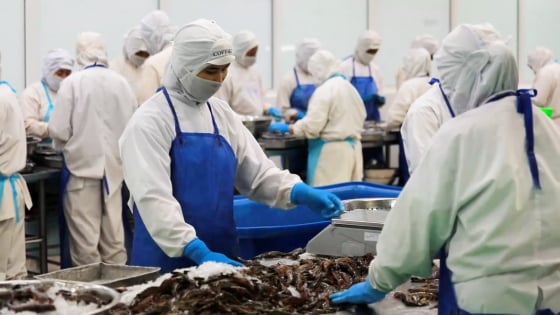
(VAN) Despite a 12.8% year-on-year surge to nearly USD 5.8 billion, seafood sector faces tightening global criteria that demand corporate adaptation.
Sustaining growth through market volatility
Viet Nam’s seafood exports maintained their upward trajectory through the first half of 2026. Data from the Viet Nam Association of Seafood Exporters and Producers (VASEP) indicates that in June 2026 alone, seafood exports hit nearly USD 1.1 billion, a 21% jump compared to the same period in 2025. Cumulative figures for the first six months brought total export turnover to nearly USD 5.8 billion, up 12.8% year-on-year.
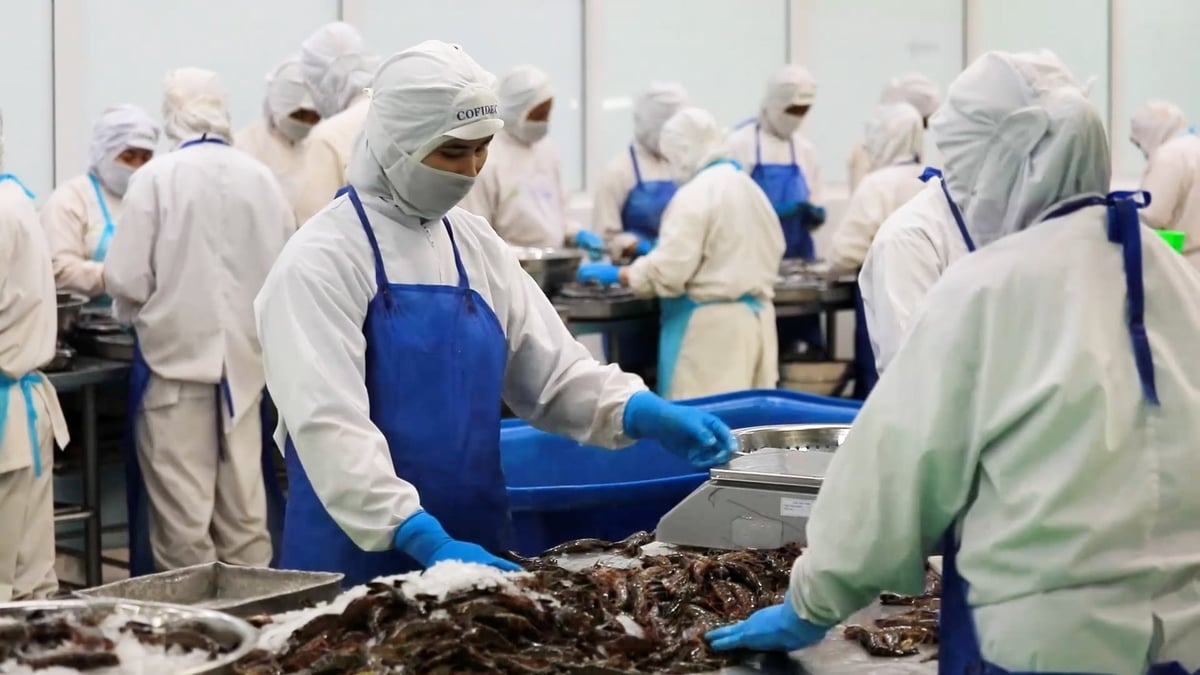
Shrimp and pangasius remain the two largest contributors to seafood export turnover in the first half of 2026. Photo: Ha Linh.
Shrimp continued to be the largest export item with a value of 2.3 billion, up 13.6%, accounting for over 40% of the total export value of the entire industry. Pangasius reached approximately USD 1.1 billion, up 12.1%, maintaining its role as the second largest export group. Alongside these, many other product groups such as squid, white abalone, crabs, and other dynamic products also recorded positive growth.
Notably, the industry’s growth momentum is no longer heavily reliant on a few traditional markets. China and Hong Kong continued to be bright spots, accumulating roughly USD 1.5 billion in turnover, a 37.9% spike over the six-month period. Meanwhile, exports to South Korea rose by 9% and the ASEAN bloc grew by 15.8%, effectively offsetting slower growth trends in the US, the European Union (EU), and Japan.
According to Ms. Le Hang, Deputy Secretary-General of VASEP, these results reflect not only a recovery in consumer demand but also the proactive agility of businesses. Enterprises have successfully restructured their product portfolios and shifted focus toward markets offering geographical advantages, lower costs, and stable consumption demand.
However, Ms. Le Hang also noted that the broader business landscape has transformed significantly. Importers are increasingly placing shorter, fragmented orders, demanding more competitive pricing, and tightening controls over product quality, certifications, traceability, and delivery timelines.
Consequently, businesses can no longer compete solely on price; they must enhance their overall capacity to fulfill the entire supply chain, from raw materials and processing to logistics and delivery.
The challenges are growing
This shift toward smaller, fast-paced orders has intensified preexisting pressures within the seafood sector.

Requirements regarding quality, traceability, and delivery timelines are becoming strictly rigorous for seafood exports. Photo: Ha Linh.
In the US market, although June exports witnessed a sharp spike of nearly 50%, cumulative six-month figures remained largely flat compared to the previous year. VASEP attributes this stagnation to a dominance of short-term orders, indicating that overall purchasing power has yet to fully stabilize. Vietnamese exporters also continue to face intense price competition from Ecuador, India, and Indonesia, alongside strict regulatory hurdles such as anti-dumping duties, countervailing duties, the SIMP, the MMPA, and stringent traceability demands.
In the EU market, the IUU yellow card remains a formidable barrier for wild-caught seafood as certification and origin control protocols grow tighter. Meanwhile, the Japanese market has experienced sluggish growth, constrained by weakening domestic purchasing power and a depreciating Japanese Yen.
Beyond market-specific regulatory hurdles, businesses must contend with surging logistics expenses. VASEP reports that international container freight rates are approaching their highest levels in nearly two years. Because the seafood industry depends heavily on refrigerated containers and demands strict temperature controls alongside rigid shipping timelines, any fluctuations in ocean freight, fuel surcharges, insurance, or vessel space shortages immediately inflate operational costs and disrupt delivery schedules.
According to Ms. Le Hang, the nearly USD 5.8 billion milestone achieved in the first half of the year offers a solid springboard for the industry to target double-digit growth for the entirety of 2026. To sustain this momentum through the remaining months, enterprises must retain their edge in expanding markets like China, ASEAN, and South Korea, while fortifying compliance capabilities to meet regulations in the US, EU, and Japan.
In addition to monitoring input and logistics expenditures, VASEP advises businesses to scale up the proportion of deeply processed, value-added products and sharpen their market risk management capacities. In an era defined by smaller orders, compressed delivery windows, and constantly elevating import standards, the ability to respond rapidly and reliably will ultimately dictate the competitive edge of Vietnamese seafood.
Agriculture News | Agri Products Price