



(VAN) Despite a sharp decline in U.S. demand for wood imports, Vietnamese wood products still increased the market share.
Declining demand
As the largest export market for Viet Nam’s wood industry, the United States continues to play a decisive role in the sector’s overall growth. However, in the early months of 2026, purchasing power in this market has not recovered as expected, placing additional pressure on Vietnamese exporters.
Preliminary data from the General Department of Customs show that as of June 15, 2026, Viet Nam’s exports of wood and wood products totaled approximately USD 7.78 billion, with wood products accounting for nearly USD 4.99 billion. Although growth has been maintained, export activity continues to be affected by weakening demand in major markets, particularly in the United States.
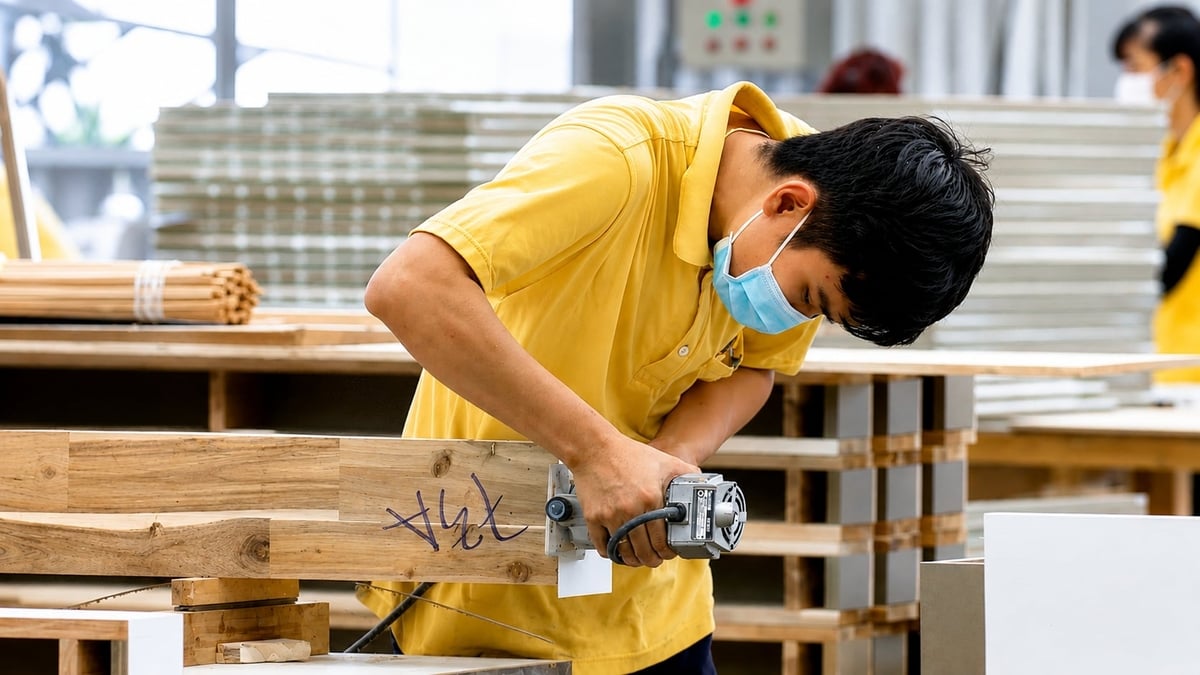
Despite the shrinking scale of imports in the U.S. market, Viet Nam’s wood industry continues to maintain its competitive advantage and expand its market share. Photo: Ha Linh.
According to the United States International Trade Commission (USITC), in the first four months of 2026, the total value of U.S. imports of wood and wood products reached USD 5.17 billion, down 25.8% year-on-year. This indicates that consumer demand and imports in the largest export market for Viet Nam’s wood industry have yet to recover.
Market difficulties are also clearly reflected at the enterprise level. Mr. Huynh Quang Thanh, CEO of Hiep Long Wood Processing Co., Ltd., said that conflicts in the Middle East have significantly increased logistics costs, directly affecting export operations.
According to Mr. Thanh, the shipping cost for a 40-foot container to the United States has risen from around USD 1,800-1,900 to USD 4,300-4,500 per container. Transit times have also lengthened due to disruptions in international shipping routes. Nevertheless, the company has recorded positive signals as many customers have returned to placing new orders instead of only consuming existing inventories as in the previous year. He added that if global shipping routes stabilize soon, export activities during the peak season from August to September are expected to improve.
Adapting to maintain market share
Although U.S. import demand has declined, this does not mean Vietnamese enterprises are losing their competitive advantage. According to the Ministry of Industry and Trade, citing USITC data, Viet Nam’s exports of wooden furniture to the United States in the first four months of 2026 reached USD 2.45 billion, down 21.1% year-on-year. However, this decline was smaller than the overall market contraction, allowing Viet Nam’s market share to increase from 44.5% to 47.4%.
The Ministry noted that the continued growth in Viet Nam’s market share of wooden furniture demonstrates that Vietnamese wood products remain competitive in the U.S. market, despite import demand not yet fully recovering.
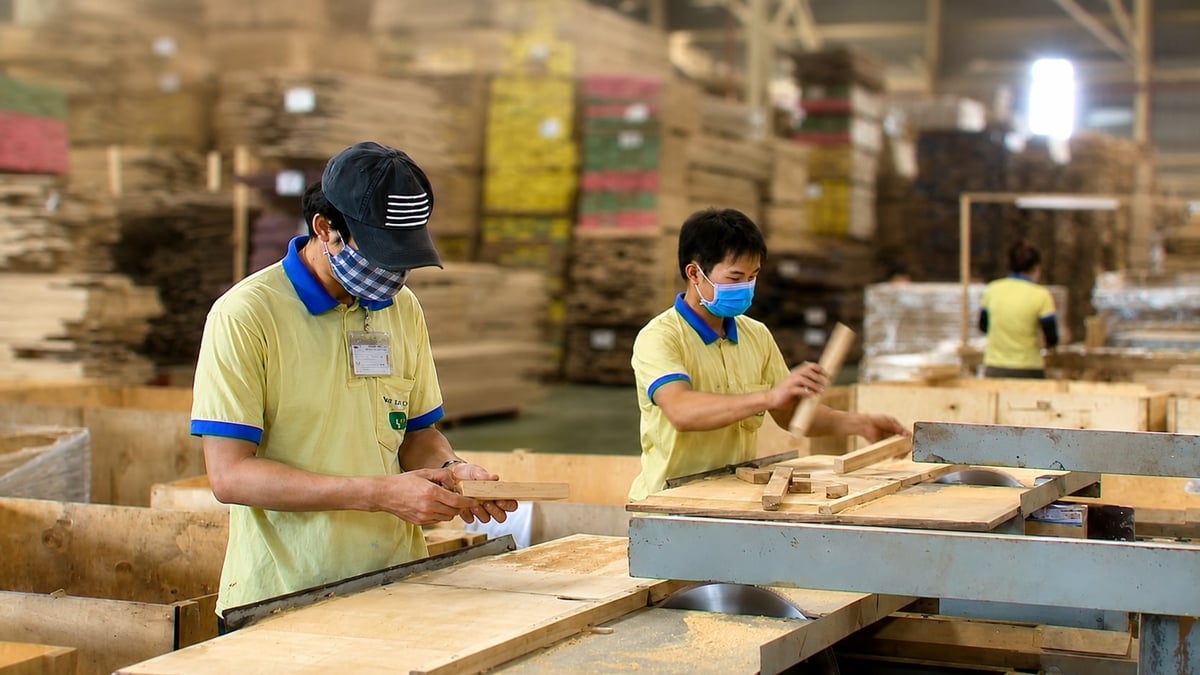
Enhancing quality and value addition is becoming a key direction for enterprises to maintain their market share in export markets. Photo: Ha Linh.
To adapt to increasingly stringent requirements from import markets, many enterprises have proactively changed their production and business models. Mr. Nguyen Liem, CEO of Lam Viet Joint Stock Company, said the company has actively completed raw material traceability documentation, updated import market regulations, and adjusted its business approach to meet new requirements.
While previously the company mainly engaged in OEM (Original Equipment Manufacturing) for U.S. brands, in recent years it has shifted toward developing its own designs (ODM – Original Design Manufacturing), supplying retail systems and expanding direct sales through e-commerce platforms. “We must adapt to each stage in order to sustain the company,” Mr. Liem emphasized.
According to Mr. Tran Quoc Manh, Vice Chairman of the Viet Nam Handicraft Exporters Association, businesses will continue to face multiple challenges through the end of the year as they simultaneously restore supply chains and comply with increasingly stringent environmental standards in major markets, particularly the United States. He noted that green transformation and digital transformation have become inevitable requirements for the wood industry. At the same time, enterprises need to strengthen linkages within raw material development zones, collaborate on product design, and build brands to enhance value addition and competitiveness in demanding markets such as the U.S.
The Ministry of Industry and Trade forecasts that exports of wood and wood products in the second half of 2026 are likely to continue growing, although the pace may slow. Amid intensifying competition in major export markets, improving product quality, meeting market standards more effectively, and leveraging free trade agreements will continue to create opportunities for Viet Nam’s wood industry to maintain its market share in the United States.
Agriculture News | Agri Products Price