

(VAN) Safe agricultural supply chain now faces its most pressing challenge: building the operational framework that connects every link in the chain and transforms a collection of discrete partnerships into a sustainable ecosystem.
From fragmented linkages to a functioning ecosystem
As Ho Chi Minh City’s safe agricultural supply chain has matured, from growing regions through to distribution networks, its basic components have begun to take shape. Yet the connections binding those components remain largely piecemeal, falling short of the integrated, fully operational ecosystem the sector needs.
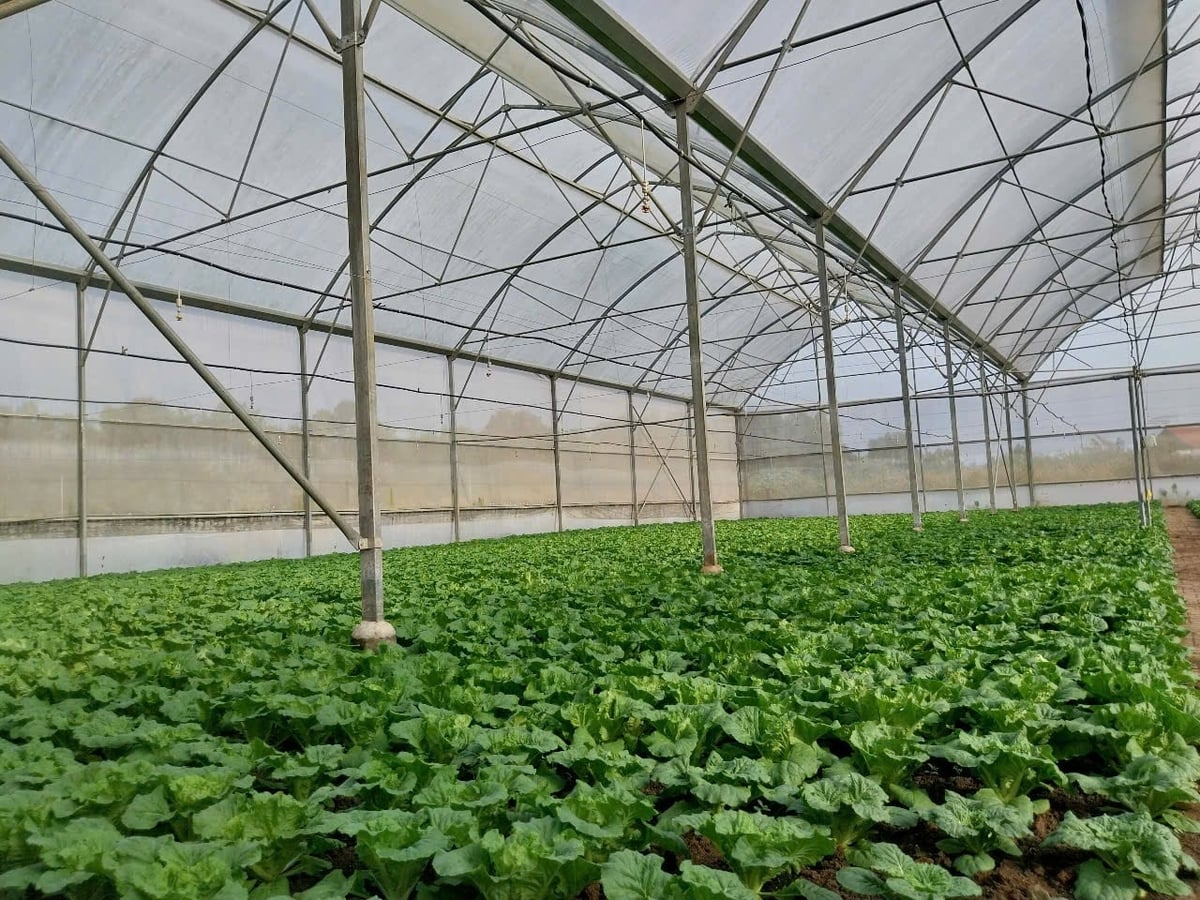
Expanding the development footprint is not simply a matter of adding acreage, it is an opportunity to reorganize agriculture along modern lines. Photo: Ha Duyen.
In many existing models, the relationship between producers and buyers still rests on individual contracts or informal arrangements. While these agreements solve the immediate problem of market access, they fail to create genuine continuity across the chain, from growing zones and preliminary processing through logistics to final distribution. When each link operates according to its own logic, costs multiply and the capacity to scale is constrained.
Economist Dr. Dinh The Hien draws a clear distinction between a mere “linkage” and a true “ecosystem.” The difference, he argues, lies in whether the entire chain can operate in synchrony. “A supply chain only becomes an ecosystem when its components are not functioning in isolation but are connected through shared information, data and common mechanisms,” he said. “If every actor does things their own way, businesses are left to fend for themselves, costs remain high and expansion becomes extremely difficult.”
The evidence bears this out. Despite substantial investment by many companies in product traceability, quality control and distribution agreements, data across the chain remains disconnected. Quality oversight therefore tends to stop at individual stages rather than tracking a product through its entire journey to the consumer.
Dao Ha Trung, chairman of the Ho Chi Minh City High-Tech Association, identifies the most significant bottleneck not as an absence of standards but as the absence of a common platform through which existing standards can be mutually recognized and uniformly applied. Without that shared framework, he argues, the chain cannot operate smoothly or achieve meaningful scale.
The obstacles extend beyond technical matters into market structure. Distribution channels continue to involve multiple layers of intermediaries, substantially eroding the value that reaches producers. When production remains small-scale and fragmented, farmers and cooperatives negotiate from a position of weakness, costs are driven up and the distribution of benefits across the chain remains inequitable.
Building out the supply chain ecosystem
Whereas the earlier phase of developing safe agricultural products focused on strengthening individual links, from growing regions to distribution, the next phase demands something more ambitious: reorganizing the entire chain along ecosystem lines.
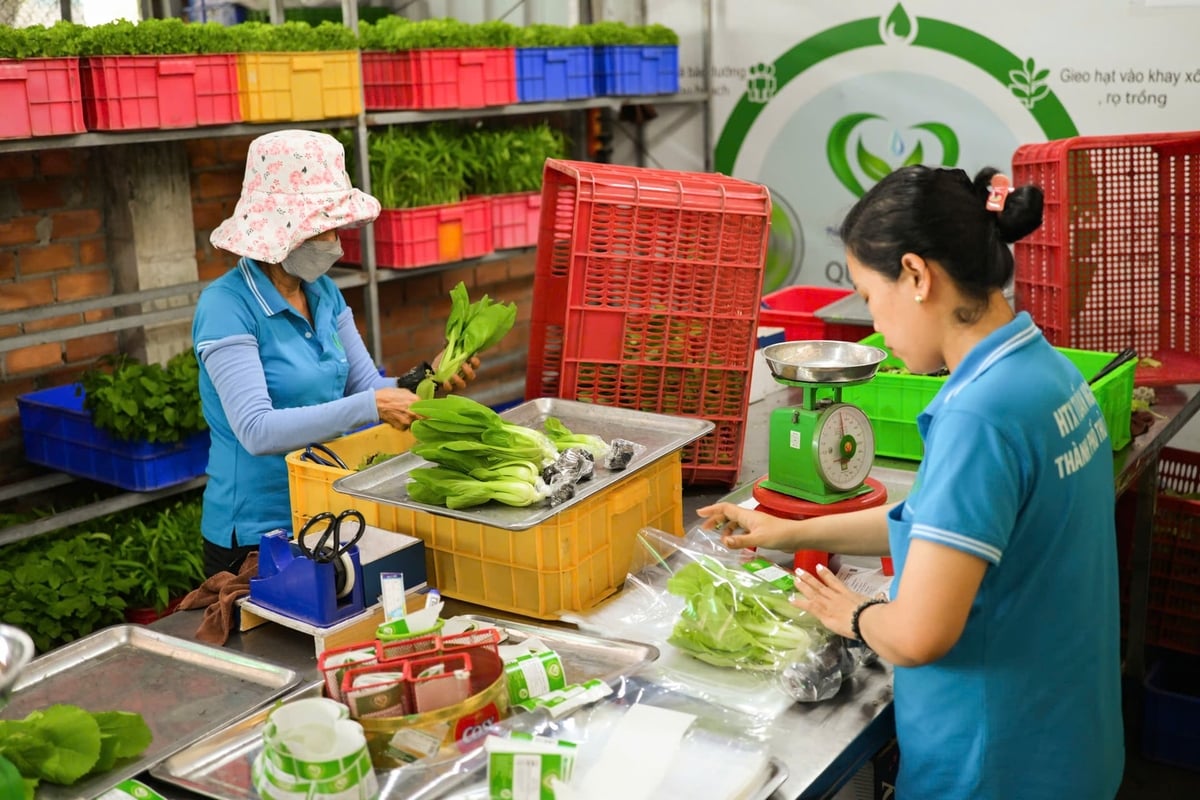
To ensure the ecosystem operates effectively, the core challenge of equitably distributing costs and benefits across every link in the chain must be resolved. Photo: Mai Ca.
One of the foundational requirements is restructuring production at greater scale. Nguyen Thanh Trung, chairman of the Ho Chi Minh City Farmers Association, argues that expanding the city’s agricultural footprint is not simply a matter of adding acreage. It is an opportunity to reorganize agriculture along modern, integrated and large-scale lines, creating raw-material zones that are tied directly to processing facilities, logistics networks and end markets, rather than continuing with the dispersed production model of the past.
Alongside this, the safe agricultural supply chain is being steered toward a multi-directional cooperative model. The “six-stakeholder partnership” framework, bringing together government, farmers, scientists, businesses, banks and distributors, is seen as an approach capable of synchronizing capital, technology and market access under a single structure. When stakeholders participate in a common framework rather than acting independently, the chain can operate with greater stability and with fewer costly intermediaries.
At the market level, the Ministry of Industry and Trade continues to serve as a connector through trade promotion programs, supply-and-demand matching initiatives and the development of modern distribution infrastructure. Beyond expanding market outlets, these activities help reshape how the chain is organized, with distribution companies positioned as central integrators linking the various components.
Digital transformation is emerging as an equally critical tool for completing the ecosystem. From traceability and price monitoring to supply-and-demand forecasting and transaction management, data is expected to become the connective tissue that allows each stage of the chain to communicate and coordinate with the others, replacing the current pattern of siloed operations.
Even so, Dr. Dinh The Hien cautions that for the ecosystem to function effectively, a fundamental problem must first be resolved: the equitable distribution of costs and benefits across the chain. “At present, the costs of quality control, traceability and logistics fall predominantly on businesses, while selling prices do not fully reflect this value,” he said. “When benefits are not fairly shared, linkages are very difficult to sustain over time.”
When market tools, data platforms, distribution systems and transaction channels, operate in an integrated manner, he argues, prices will more accurately reflect product quality. At that point the chain will no longer need to rely on administrative controls alone; it will be capable of self-regulating through market mechanisms.
“Only when the flows of information, goods and value are connected without interruption can safe agricultural products escape the trap of price-based competition and move toward genuine long-term sustainability,” Dr. Hien concluded.
Ho Chi Minh City has already signed agricultural supply chain cooperation agreements with several provinces, including Dong Nai, Lam Dong, Long An and Dong Thap, focused on quality standards and stable market access. For the 2026-to-2030 period, the city is working toward establishing an inter-regional safe agricultural supply network that integrates logistics, data traceability and direct links to distribution systems.
Agriculture News | Agri Products Price