



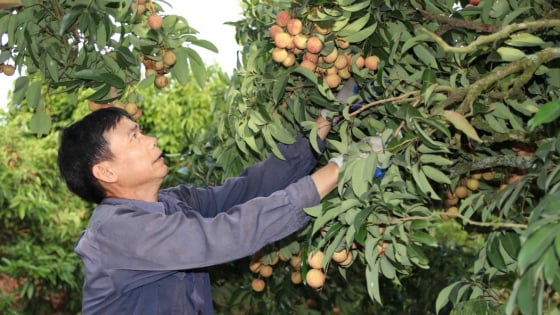
(VAN) Despite decline in output, the ancestor lychee tree in Thanh Ha drew 20,000 visitors and saw its fruit purchased at a record price of USD 77.82/kilo as the season drew to a close.
The 2026 lychee season in Thanh Ha, Hai Phong, long regarded as the heartland of Vietnamese lychee cultivation, has officially come to an end, leaving behind striking figures that speak to the enduring power of the variety’s brand. The focal point of this year’s season, as in previous years, was the nearly 200-year-old ancestor lychee tree in Thuy Lam village.
Hoang Van Luom, who personally tends the ancestor tree, said that despite unfavorable weather conditions that caused yields across the region to fall sharply, the ancestor tree flowered and fruited evenly. Notably, the tree’s entire output was purchased in full by a single buyer at the remarkable price of 2 million dong (approximately USD 77.82) per kilogram.
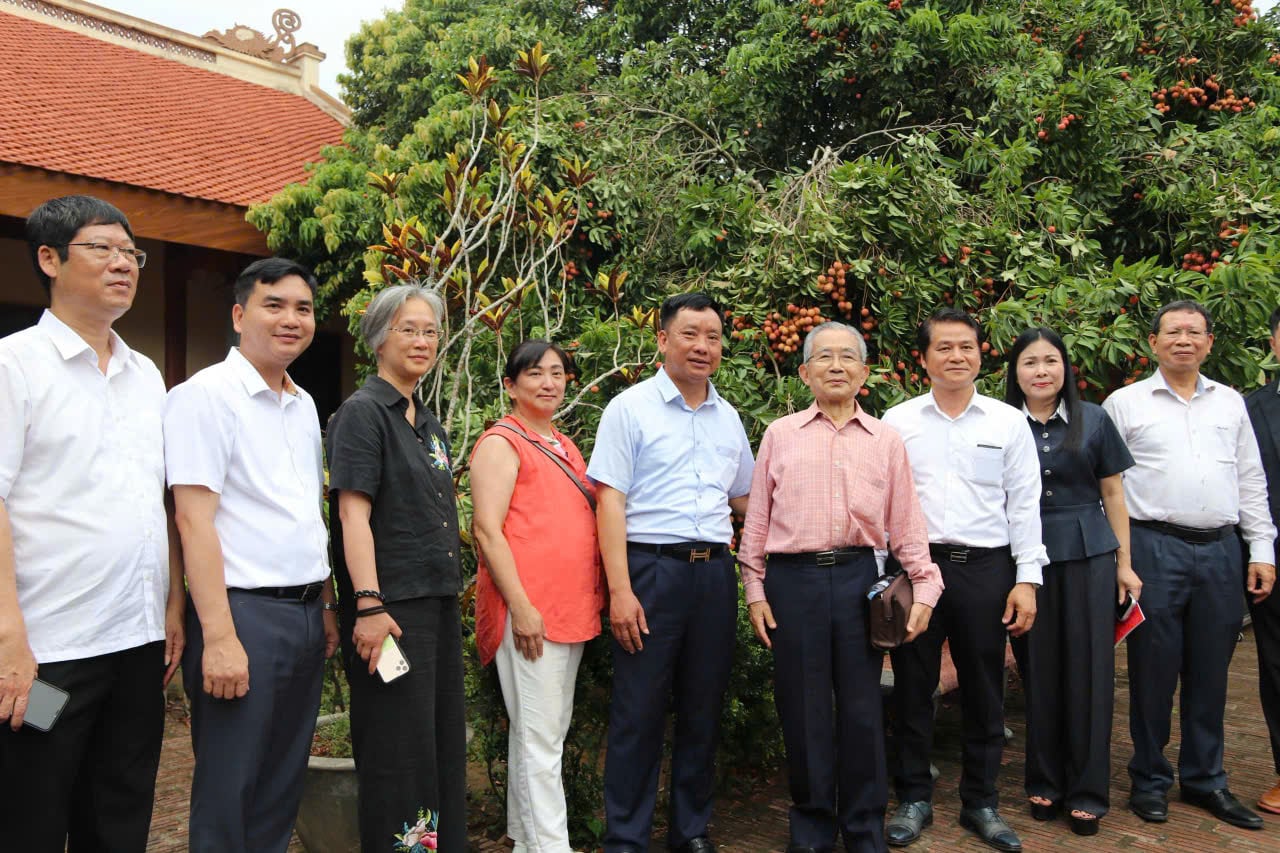
Hai Phong City People’s Committee leaders accompany a Japanese delegation on a visit to the ancestor lychee tree. Photo: Dinh Muoi.
The fervor was not confined to the ancestor tree alone. Its so-called first- and second-generation offshoots, one direct cutting and three further propagations planted nearby, also became sought-after rarities, with traders locking in garden-gate prices of between 1 million and 1.5 million dong (roughly USD 38.91 to USD 58.37) per kilogram. The ancestor tree has now completed its harvest, with the surrounding offspring trees expected to finish within the next two to three days.
The tree traces its origins to Hoang Van Com, who, nearly two centuries ago, brought home three lychee seeds after tasting the exceptional fruit at a banquet. Only one seed survived to germinate, and that single tree became the founding source of what is now one of Vietnam’s most celebrated lychee-growing regions. In 1992, the Vietnam Gardening Association confirmed it as the oldest lychee tree in the country, and in 2016 the Vietnam Record Association recognized it as the longest-living lychee tree in Vietnam.
The magnetic pull of this living heritage has fueled an agritourism boom across the Thanh Ha lychee-growing area throughout the past several months. From the start of the season to the present, the ancestor tree site has welcomed approximately 20,000 visitors, double the figure recorded in 2025. The heaviest foot traffic has fallen on weekends, with visitors arriving not only from neighboring provinces but also from central and southern Vietnam.
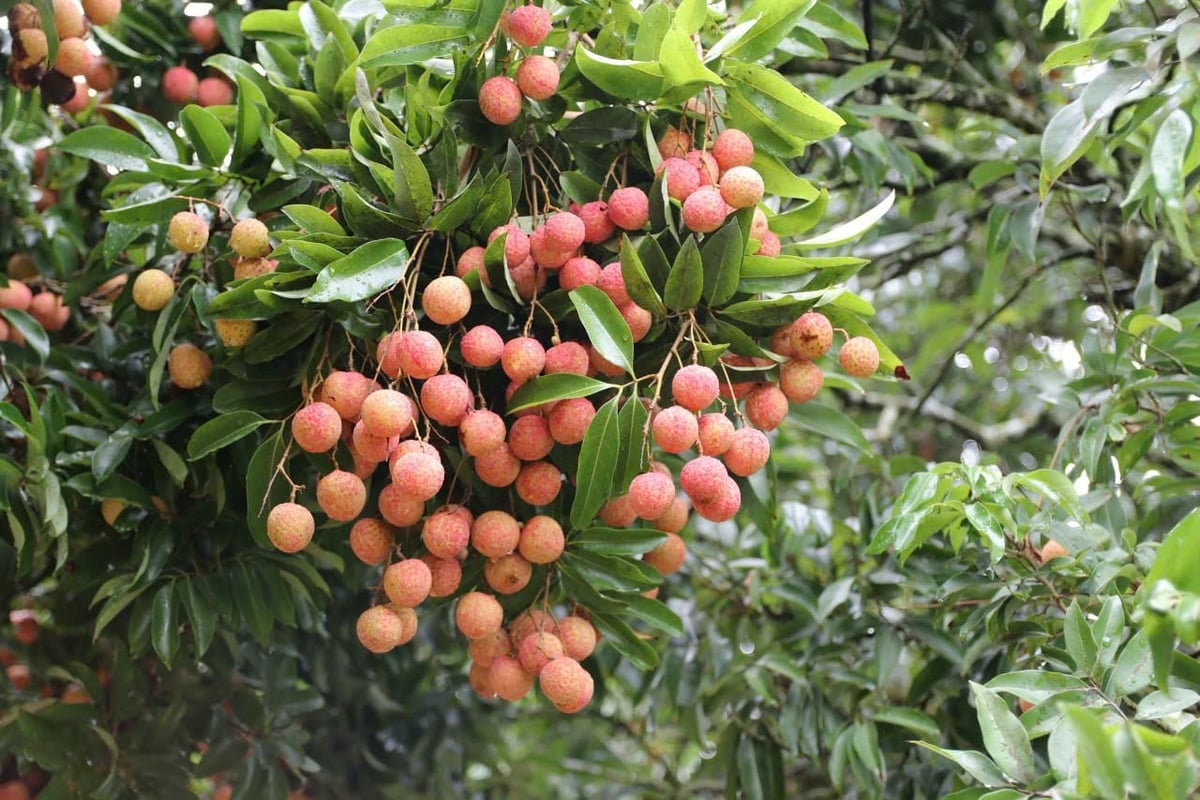
The Thanh Ha ancestor lychee tree bears fruit reliably every year and consistently commands premium prices — reaching 2 million dong ($77.82) per kilogram in 2026.Photo: Dinh Muoi.
This year’s season also drew notable international attention, with seven delegations from Japan, ten from China, and three from France visiting to observe the ancient tree and learn about its cultivation history.
To accommodate the surge in visitors, the Thanh Ha Commune People’s Committee invested in infrastructure upgrades, landscaping improvements, the installation of directional signage, and the creation of dedicated photography areas. Visitors come not only to see the tree but also to hear the story of how a handful of seeds traveled nearly two centuries ago, giving rise to an entire regional identity.
The broader picture for Hai Phong’s lychee growers in 2026, however, has been far less celebrated. According to the city’s Department of Crop Production and Plant Protection, the city’s total lychee-growing area stood at approximately 9,350 hectares this season, but output is estimated at only 55,000 tonnes, a significant decline from last year’s 71,000 tonnes. Early-season lychees accounted for 35,000 tonnes, while the main-season variety yielded only around 20,000 tonnes.
With lower supply and a compressed harvest window, grade-one lychee prices at wholesale markets have ranged from 75,000 to 80,000 dong (approximately USD 2.92 to USD 3.11) per kilogram, up more than 20,000 dong (USD 0.78) from the start of the season, while standard-grade lychees have held at 55,000 to 65,000 dong (USD 2.14 to USD 2.53) per kilogram.
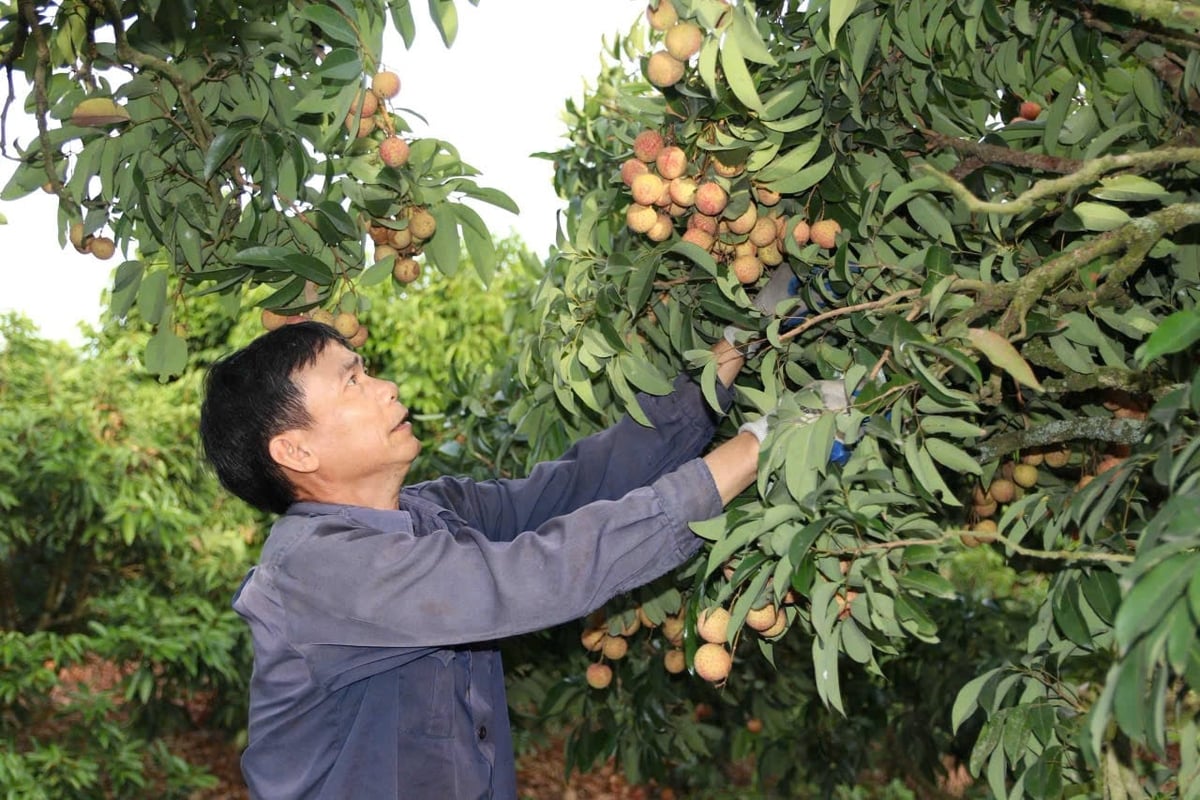
Although the 2026 lychee season in Hai Phong saw a below-average harvest, prices remained relatively high and stable thanks to thorough advance preparation. Photo: Dinh Muoi.
Despite the poor harvest, Hai Phong remains committed to its target of exporting 50 percent of total output. The city currently holds 198 registered growing-area codes for export to demanding international markets. China remains the traditional anchor market, absorbing around 22,000 tonnes or 40 percent of total exports, while more than 5,000 tonnes are earmarked for Japan, the United States, Australia, and the European Union.
To maintain access to foreign supermarket shelves, the city has sustained 12 GlobalGAP-certified growing zones and 81 VietGAP-certified zones. Major exporters, including Ameii Vietnam and Rong Do, have proactively signed early procurement contracts for shipments to Japan, the United States, and Australia.
Nevertheless, lychee growers and the local agricultural sector more broadly continue to face the challenge of brand fraud, with counterfeit and mislabeled products exploiting the Thanh Ha name for commercial gain. Management of registered growing-area codes has now been decentralized to the commune level under Decree 38/2026/ND-CP to ,
Alongside exports, the domestic retail channel, anchored by supermarket chains including Go!, WinMart, and Co.op Mart, has been identified as a key consumption pillar, helping Thanh Ha lychees maintain their market value even in a year of adverse weather conditions.
Agriculture News | Agri Products Price