

(VAN) After a highly volatile period in 2025, durian exports from Viet Nam are showing strong momentum in the first months of 2026.
In the early months of 2026, harvesting activity has become busier than ever across many major durian-growing regions in the Central Highlands and the Mekong Delta. From durian orchards in Dong Thap, Vinh Long, Dong Nai, and Lam Dong to packaging centers, cold storage facilities, and long lines of container trucks heading toward border gates and seaports, all signs point to a positive signal: Viet Nam’s durian industry is entering a new phase of growth, more systematic, more professional, and more sustainable.
After the turbulent period of 2025, Viet Nam’s durian sector is showing strong momentum in the first months of 2026, continuing to affirm its position as one of the leading export products of the agricultural sector.
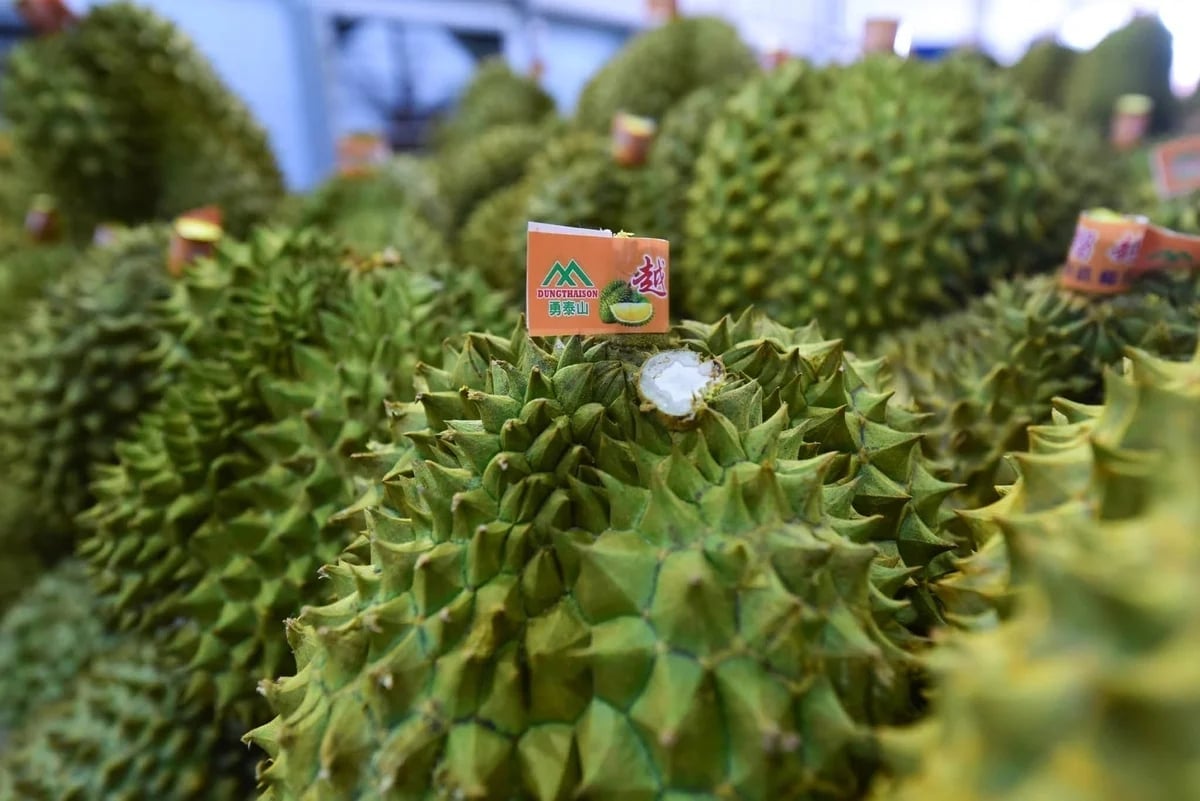
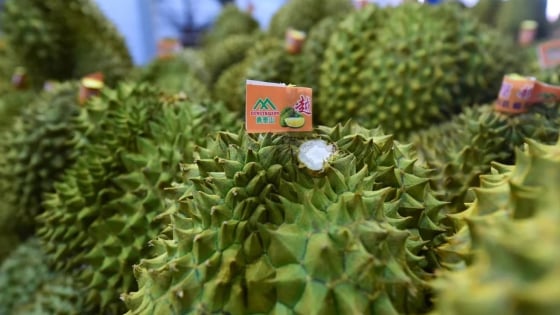
Durian is a high-value agricultural product. Photo: Tung Dinh.
Overcoming challenges to regain growth
The year 2025 was considered a highly challenging period for Viet Nam’s durian industry. Import markets, especially China, introduced new requirements related to food safety and traceability. Increased inspections of food safety indicators for all shipments created considerable difficulties for exports during the early part of the year.
Data showed that total fresh durian exports in 2025 reached around 1.1 million tons, lower than the more than 1.3 million tons recorded in 2024.
However, this was also a necessary stage for the industry to proactively shift toward more sustainable development, prioritizing quality, traceability, and food safety control instead of pursuing overheated growth based purely on volume.
Notably, the number of export shipments in 2025 still increased strongly, indicating that trade activities had not slowed down but were instead moving toward greater flexibility, risk diversification, and adaptation to increasingly strict import controls.
Amid tighter food safety and traceability regulations worldwide, Viet Nam’s ability to maintain stable durian exports is viewed as a positive signal, reflecting the improving adaptability of businesses, local authorities, and producers.
Entering 2026, the durian industry aims to strongly restore growth not only in volume but also in value enhancement, market expansion, and building a national brand for Vietnamese durian.
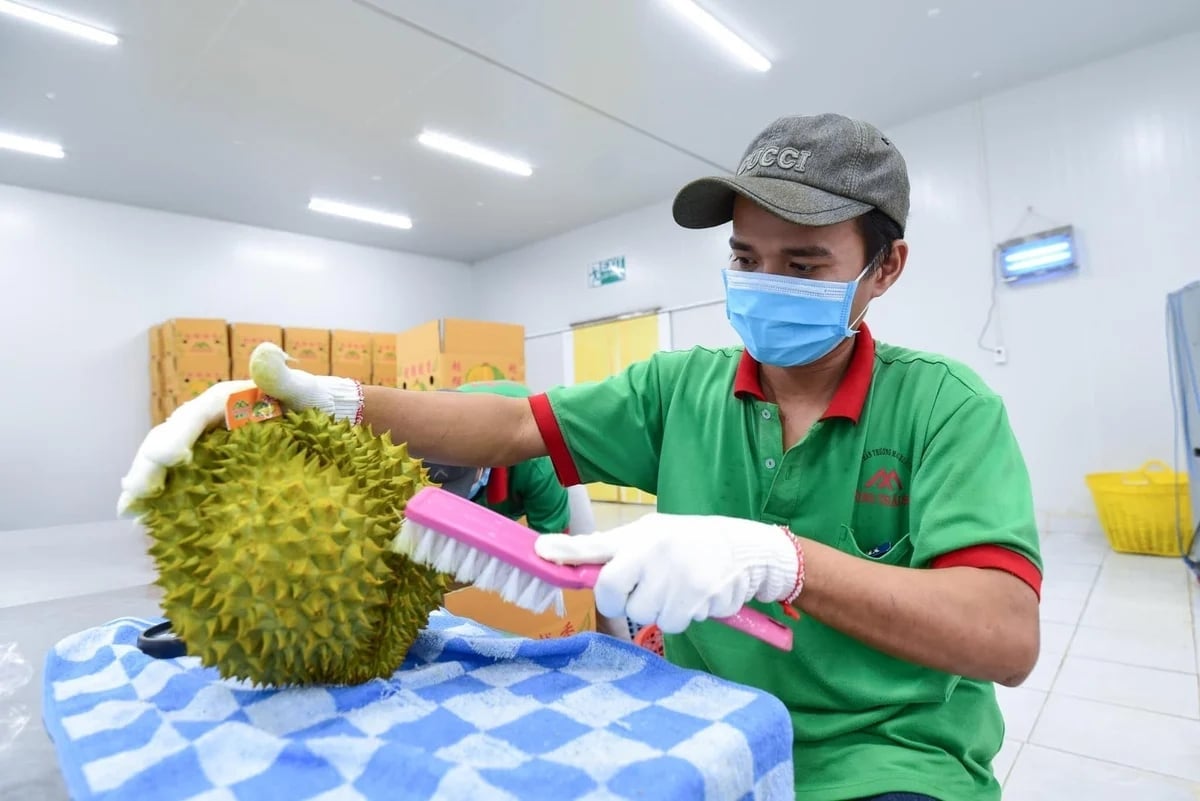
Durian exports in early 2026 have shown many bright spots. Photo: Tung Dinh.
Bright spots in the first months of 2026
In just the first four months of 2026, durian exports recorded many positive signals in both volume and value. According to customs data, Viet Nam’s durian exports reached approximately $ 221.7 million in the first quarter of 2026, soaring by 230% compared to the same period in 2025.
Notably, export value growth outpaced volume growth, showing that the industry is gradually shifting from quantity-driven expansion toward higher added value, improved quality, and greater export efficiency.
Not only have export markets remained stable after the stricter technical controls imposed in 2025, but many businesses have also reported rising order values thanks to the transition toward premium products, frozen durian, and more tightly controlled supply chains.
Total export volume exceeded 80,000 tons, including around 68,500 tons of fresh durian and nearly 11,600 tons of frozen durian.
According to businesses and export units, although export volumes have not yet reached peak harvest-season levels, export values in the early months of 2026 remained positive thanks to improved product quality, more stable selling prices, and a rising share of frozen and processed products.
What stands out is that many markets recorded exceptionally high growth rates, in some cases reaching triple digits compared to the same period last year. Beyond maintaining exports to traditional markets, Vietnamese businesses are also expanding their presence in many promising new markets thanks to product quality and the ability to meet technical standards.
Alongside the Chinese market, several demanding markets continued recording positive growth in Q1 2026, including the United States with growth of more than 107%, South Korea with nearly 262%, Australia with over 40%, and Japan with nearly 12%. This demonstrates that Viet Nam’s durian industry is steadily improving its ability to meet technical standards and adapt to international market demands.
One of the brightest highlights of 2026 is the breakthrough growth of frozen durian exports. While frozen durian exports amounted to just over 4,600 tons in 2024, the figure surged to more than 91,000 tons in 2025 – nearly a twentyfold increase.
This trend has continued into 2026. Frozen durian has not only increased sharply in volume but has also recorded significantly higher average export prices compared to fresh durian. In Q1 2026, the average export price of frozen durian reached approximately $4,302/ton, up more than 20% year-over-year and around 18-22% higher than that of fresh durian.
The expansion of export protocols for frozen durian products is opening major opportunities for Viet Nam’s durian sector. Unlike fresh fruit, which depends heavily on harvest seasons and has limited storage life, frozen durian can travel farther, access more demanding markets, and reduce logistics pressure during peak seasons.
This is also seen as an important shift helping Vietnamese durian move beyond traditional export models and penetrate deeper into global processing and distribution chains.
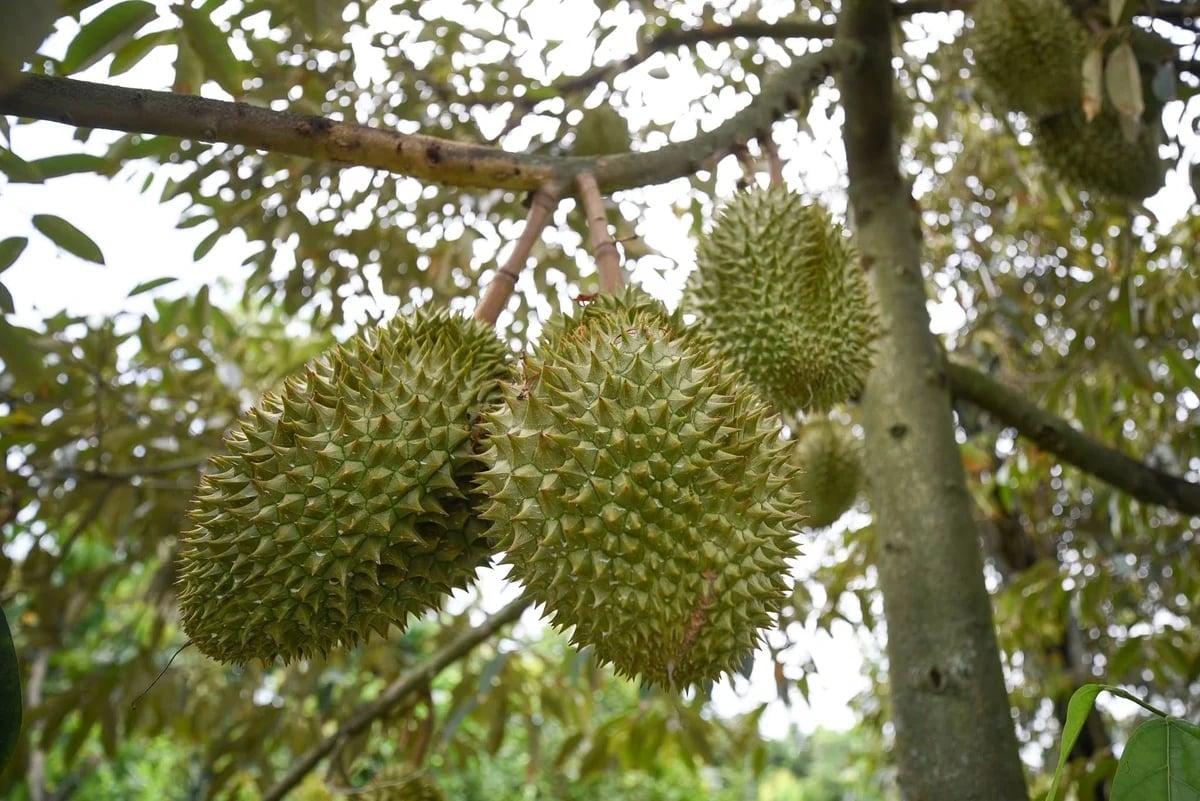
Durian quality is the foundation for sustainable development. Photo: Tung Dinh.
Quality – the foundation for sustainable development
If businesses once focused mainly on expanding production volume, “quality” has now become the central keyword of Viet Nam’s entire durian industry.
In many localities, farmers have begun changing cultivation practices by paying greater attention to production logs, proper fertilizer use, chemical residue control, and strict compliance with technical processes for export production.
At the same time, systems for growing area codes and packaging facility codes are being continuously improved. These are no longer just technical requirements imposed by importing countries but have become “passports” helping Vietnamese agricultural products demonstrate transparency and traceability in international markets.
Businesses are also accelerating investments in cold storage, freezing lines, quality management systems, and supply-chain digitalization. Instead of spontaneous purchasing as in the past, many companies are proactively linking with raw material areas and controlling production from orchards to factories to better satisfy increasingly strict market requirements.
According to experts, this is the pivotal period during which durian industry is transitioning from “hot growth” to “quality growth.”
Elevating the Vietnamese agricultural brand
Beyond generating major export revenues, durian is also reshaping rural economies in many localities. In areas that previously had low incomes, many farming households have become more prosperous after switching to professional durian cultivation models linked with businesses and export supply chains.
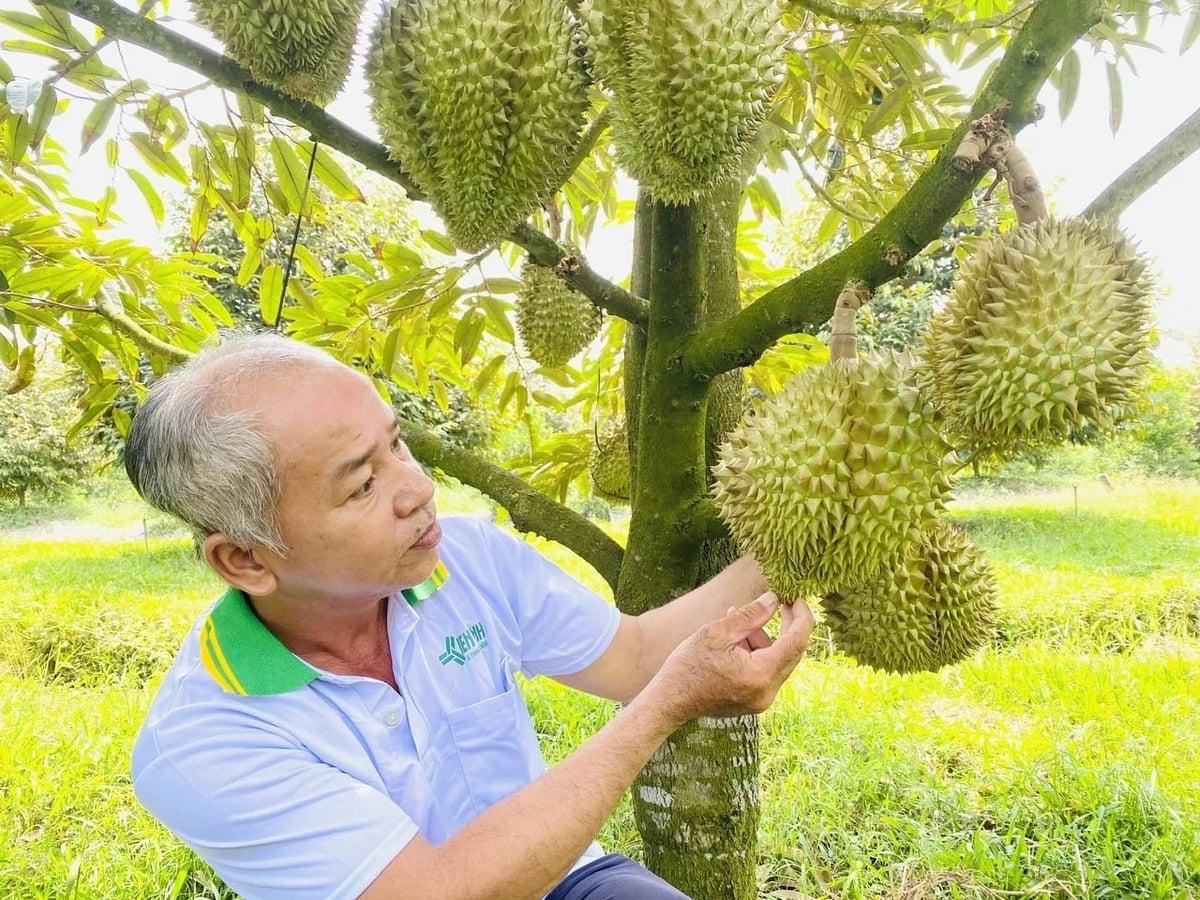
In Q1 2026 alone, Vietnam’s durian exports reached approximately $ 221.7 million, up 230% compared to the same period in 2025. Photo: LHV.
More importantly, the success of the durian industry demonstrates the rapid adaptability of Vietnamese agriculture to global standards. From being considered heavily dependent on traditional markets, Vietnamese durian has gradually built its own position thanks to quality, professionalism, and a spirit of innovation.
Amid intensifying international competition, the journey of Vietnamese durian is not only a story of agricultural exports but also a symbol of Viet Nam’s ambition to elevate its agricultural brand on the global map. More importantly, the strong performance in the first months of 2026 shows that durian industry is gradually shifting from a quantity-based growth mindset toward a development model built on quality, added value, and sustainability, an essential foundation for building a reputable Vietnamese agricultural brand in the global market.
Agriculture News | Agri Products Price