



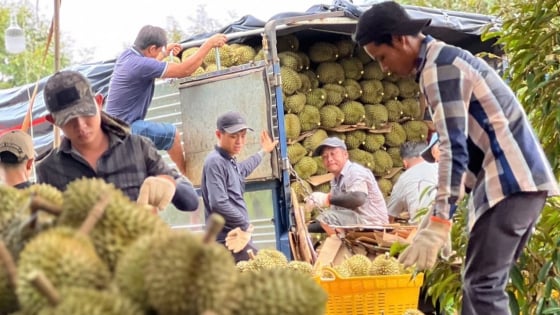
(VAN) Durian prices continued to decline during the peak harvest season, putting pressure on the production and export chain.
Prices falling day by day
Within just a few days, durian prices have been continuously adjusted downward, forcing both traders and cooperatives to closely monitor every market fluctuation before deciding on purchasing prices.
According to observations on July 6, although prices had slightly recovered from the lowest levels recorded in previous days, durian prices in key growing areas remained low. Grade A Monthong durians were trading at VND 59,000-67,000 per kilogram, while Grade B fruit ranged from VND 39,000-46,000 per kilogram. Meanwhile, Grade A Ri6 durians were priced at only VND 34,000-38,000 per kilogram, with Grade B commonly at VND 19,000-22,000 per kilogram, significantly lower than the same period last year.
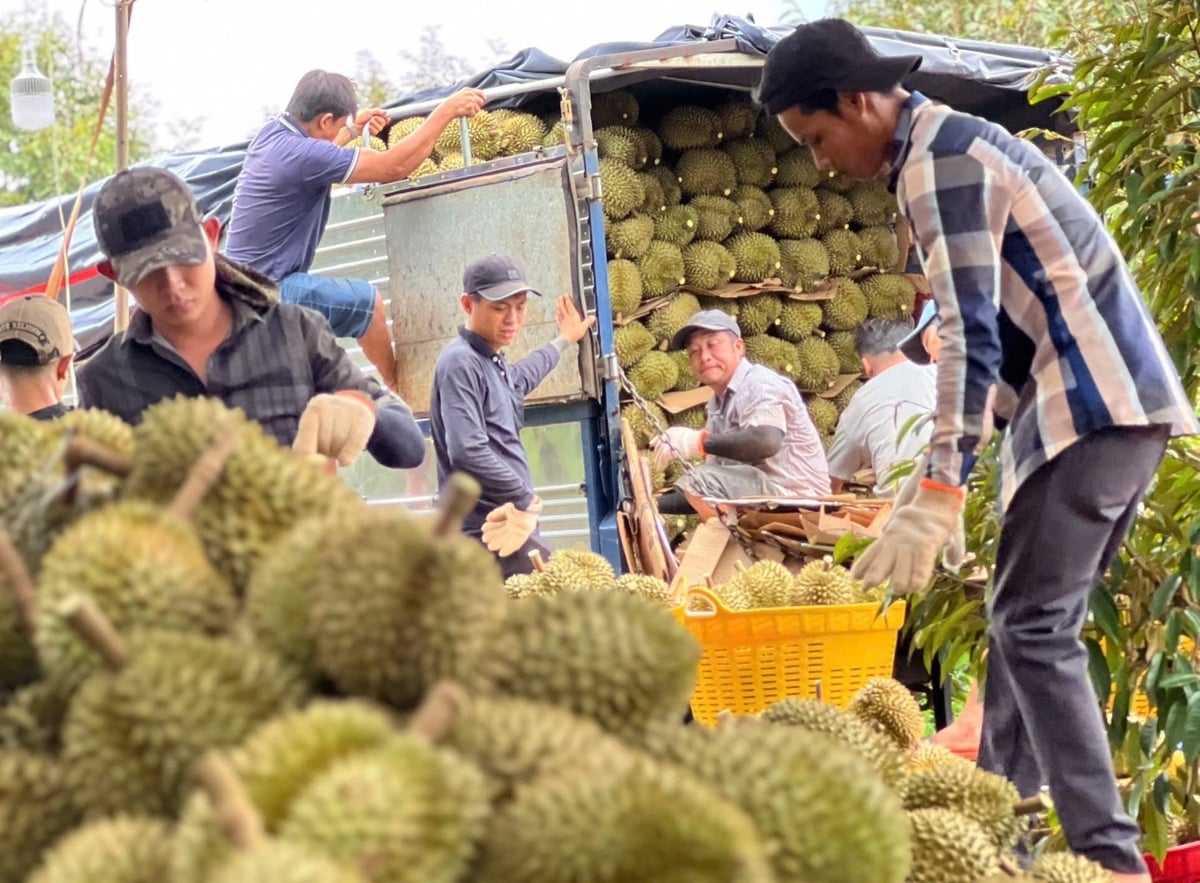
Constant price adjustments have forced enterprises and cooperatives to closely monitor market developments when making purchasing decisions. Photo: Tran Hung.
According to Mr. Tran Van Cuong, a durian trader in Dong Nai, purchasing prices have fallen by VND 2,000-3,000 per kilogram within just a few days and have yet to show signs of stabilising. In previous years, Grade A Monthong durians were commonly traded at VND 70,000-90,000 per kilogram, but now prices have at times dropped to just over VND 60,000 per kilogram. The Ri6 variety has faced even greater pressure, with a sharp price decline directly affecting the profits of both traders and growers.
The price drop has also led to adjustments among purchasing cooperatives. According to Ms. Dang Thi Thuy Nga, Director of Xuan Dinh Agricultural Trade and Service Cooperative (Dong Nai), when businesses lower their purchasing prices, cooperatives are also forced to adjust accordingly to align with overall market conditions.
The cooperative is currently purchasing Ri6 durians at around VND 20,000-23,000 per kilogram, while bulk Monthong durians from quality orchards are priced at approximately VND 51,000-52,000 per kilogram.
“When businesses reduce their purchasing prices, cooperatives also have to follow suit. We have to adjust according to market fluctuations; we cannot maintain the old prices,” Ms. Nga said.
Explaining the market developments, Mr. Dang Phuc Nguyen, General Secretary of the Viet Nam Fruit and Vegetable Association, said the latest price decline resulted from a combination of factors. First, following the strong consumption period around the Doan Ngo Festival, demand in the Chinese market declined again in line with seasonal patterns. At the same time, lower-quality durian output in southern Thailand has also pushed down the overall market price level.
In addition, Viet Nam’s durian output this year is estimated to increase by around 20-30% compared with last year, resulting in more abundant supply during the peak harvest season. Notably, since June 1, China has implemented Order 280, introducing stricter control requirements for imported durians, making purchasing and export activities more cautious.
According to Mr. Nguyen, the simultaneous occurrence of multiple factors has put pressure on durian prices across the region, including Viet Nam. However, he noted that this is a market-driven adjustment, and prices could recover as supply, demand, and import activities gradually return to balance.
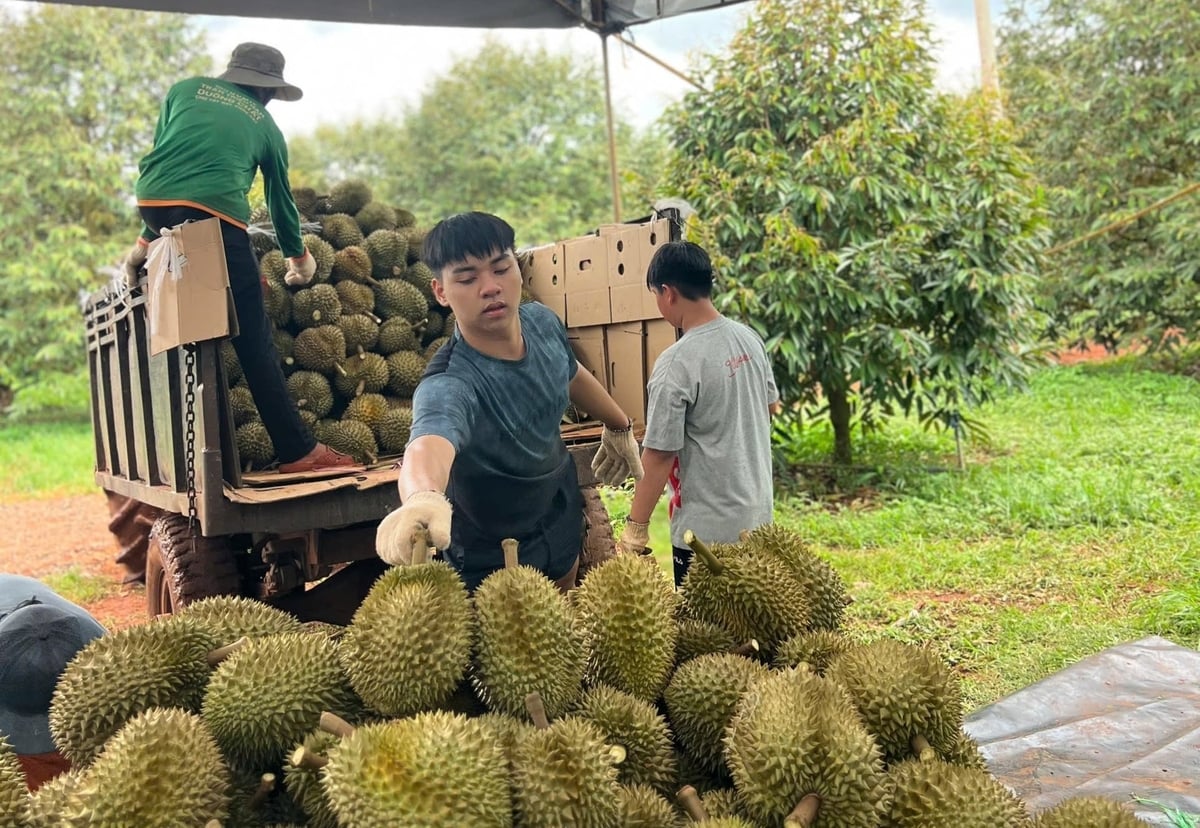
Price fluctuations and increasingly stringent quality control requirements are making purchasing activities more cautious. Photo: Tran Hung.
Purchasing plans disrupted
Fluctuating durian prices have affected not only growers but also export enterprises and cooperatives, forcing them to continuously adjust their purchasing plans. In a market that changes day by day, securing a stable supply has become more challenging than in previous seasons.
Mr. Phan Nhat Tam, Director of Khoi Phong Farm Co., Ltd. (Dong Nai), said the company’s purchasing volume has dropped sharply compared with the same period last year. Previously, the company purchased around 70-80 tonnes of durians per day, but the figure has now fallen to only 15–20 tonnes. Export progress has also slowed significantly, from 3-4 containers per day to approximately one container every 2-3 days.
According to Mr. Tam, demand in the Chinese market has not fully recovered after the peak consumption period, while domestic supply has entered the main harvest season, forcing businesses to carefully calculate each purchased shipment. Instead of increasing output as in previous years, companies are now required to adjust their plans according to market developments to minimise risks.
Price fluctuations have also made cooperative operations more passive. According to Ms. Dang Thi Thuy Nga, the biggest challenge at present is not simply lower prices, but the speed at which prices change, causing purchasing plans that have just been agreed upon to be revised immediately.
At times, the cooperative had already surveyed orchards, agreed on prices, and prepared harvesting workers, but after just one night, market prices changed, forcing the entire purchasing plan to be adjusted. Continuous price volatility makes it difficult for cooperatives to proactively manage output volumes and delivery schedules for businesses.
“Prices change every day, so purchasing plans must change accordingly. We may finalise a price today, but if businesses adjust prices the next day, cooperatives have to recalculate. We are no longer as proactive as before,” Ms. Nga said.
She noted that this year’s market differs from previous years in that both sellers and buyers have become more cautious. Purchasing decisions are no longer made far in advance but must closely follow daily price movements to minimise risks.
According to businesses, if demand in the Chinese market gradually improves in the coming period, durian prices may recover. However, the latest adjustment also shows that the market is operating according to new signals, requiring enterprises, cooperatives, and growers to adapt more quickly to fluctuations in supply and demand.
As of the end of June 2026, the average export price of fresh durians reached US$3,095 per tonne, down 14.1% compared with April 2026 and 9.2% year-on-year. The average export price of frozen durians stood at US$5,190 per tonne, a decrease of 2.1% compared with April 2026.
Experts said that durian supply is rising sharply as many growing areas enter the peak harvest season, meaning selling prices may continue to fluctuate unfavourably in the short term. If consumption and processing capacity fail to keep pace with the rapid increase in output, durian prices are unlikely to recover in July and August.
$ 1 = VND 26,470 – Source: Vietcombank.
Agriculture News | Agri Products Price