



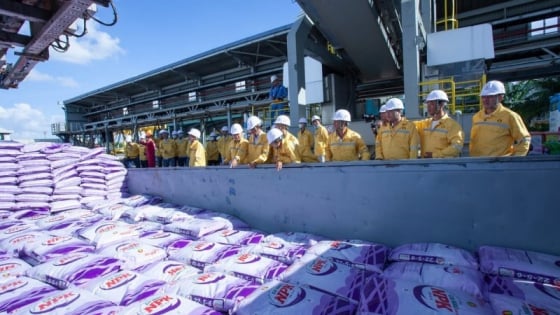
(VAN) Viet Nam exported 1.7 million tons of fertilizer, posting sharp increases in both volume and value after global fertilizer supplies were disrupted by the conflict in the Middle East.
According to the Department of Viet Nam Customs, Viet Nam exported approximately 1.7 million tons of fertilizer in the first six months of 2026, generating revenue of USD 933 million. The figures represent a 52% increase in volume and a 107% increase in value compared to the same period last year.
Notably, Cambodia remained Viet Nam’s largest export market, importing more than 330,000 tons worth USD 146 million. Other key markets included South Korea with nearly 149,000 tons worth USD 104 million, the Philippines with 118,000 tons worth USD 64 million, and Malaysia with around 88,000 tons worth USD 49 million.
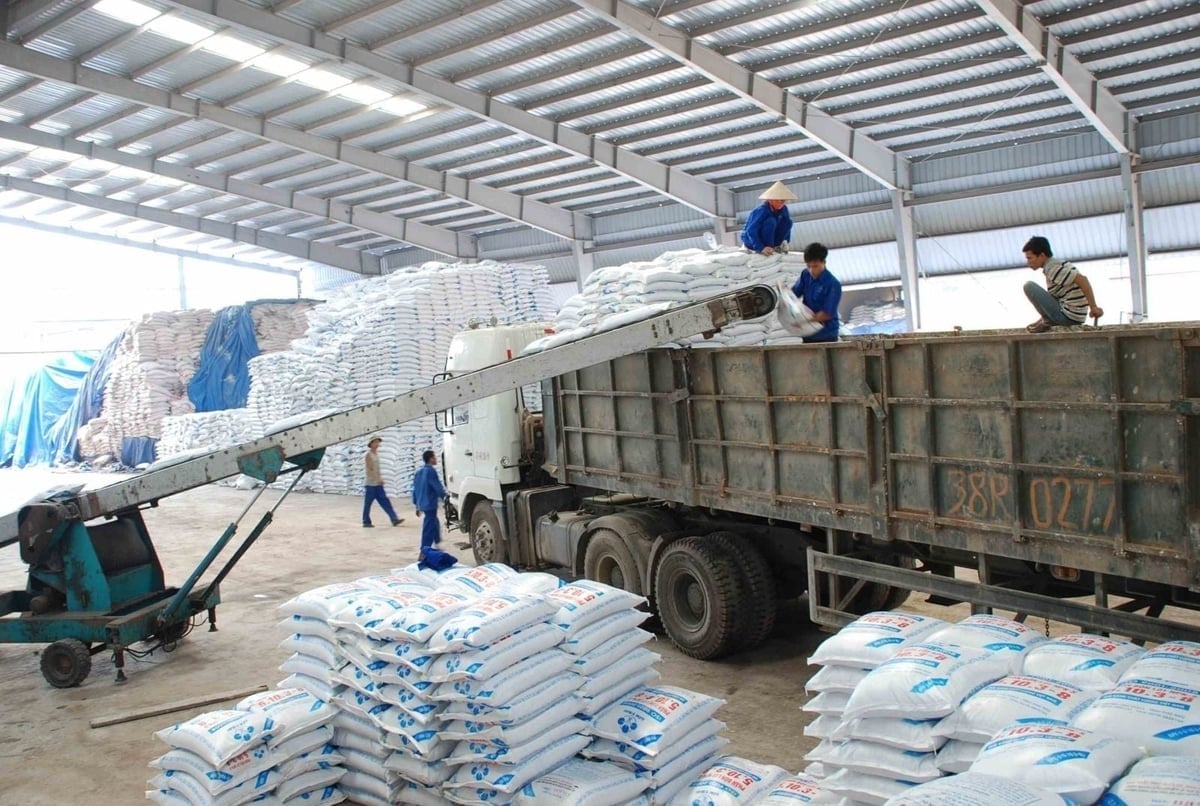
Viet Nam exported approximately 1.7 million tons of fertilizer in the first six months of 2026. Photo: VAN.
According to fertilizer enterprises, the primary driver behind this strong growth has been disruptions in global fertilizer supplies. Geopolitical tensions in the Middle East have affected shipping through the Strait of Hormuz, a vital artery for global energy trade and fertilizer production materials. As a result, many fertilizer plants across the Persian Gulf have been forced to reduce operating capacity. At the same time, Russia and China have continued to tighten export quotas, further constraining global fertilizer supplies.
Against this backdrop, fertilizer import demand has risen in many countries, creating opportunities for Vietnamese producers to expand exports. Domestic manufacturers have flexibly adjusted their production and business plans and increased their export share to maintain plant capacity and optimize cash flow.
A representative of Petro Viet Nam Ca Mau Fertilizer Joint Stock Company (PVCFC) said the outbreak of the Middle East conflict coincided with the domestic off-season for fertilizer consumption. This enabled the company to proactively shift its focus toward exports, boosting overseas shipments of its key products, including urea and NPK fertilizers.
The favorable international market conditions were quickly reflected in the business performance of many fertilizer enterprises. According to its six-month preliminary report, PVCFC generated revenue of more than VND 11.8 trillion and exported over 900,000 tons of products, fulfilling more than 59% of its annual target.
In the domestic market, fertilizer prices are experiencing an upward trend, particularly for urea, DAP, and NPK products in Southern Viet Nam, while prices in the Northern region have remained broadly stable.
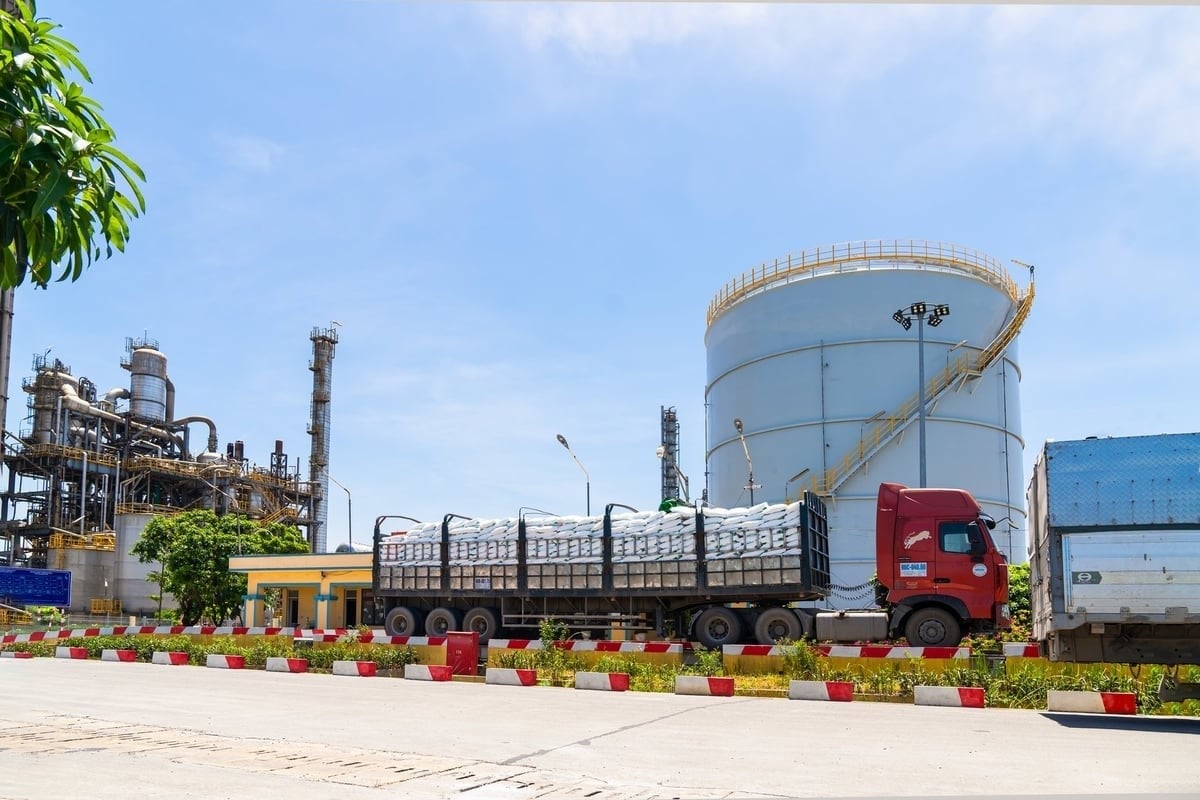
Cambodia remained Viet Nam’s largest fertilizer export market, importing more than 330,000 tons. Photo: VAN.
In the international market, data from DTN showed that retail fertilizer prices in the U.S. market generally declined in June compared with the previous month across most product categories. However, current prices remained 4%-41% higher than the same period last year, indicating that global fertilizer prices continue to stay at high levels.
In the coming times, if global fertilizer supplies remain constrained and import demand continues to maintain stable, Viet Nam’s fertilizer exports are expected to have ample room for further growth. However, businesses will also need to closely monitor geopolitical developments and international trade policies to proactively respond to potential market risks.
$1 = VND 26,470 – Source: Vietcombank
Agriculture News | Agri Products Price