

(VAN) Overall, markets are increasingly demanding higher standards for food safety, particularly in traceability, according to the Department of Quality, Processing and Market Development.
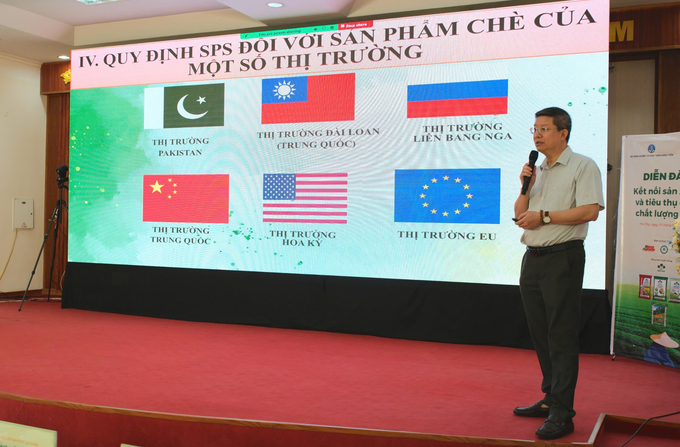
The key tea import markets for Vietnam were shared by Mr. Le Thanh Hoa at the forum. Photo: Quynh Chi.
Mr. Le Thanh Hoa, Deputy Director of the Department of Quality, Processing and Market Development, and Director of the SPS Vietnam Office, shared that for tea products to be circulated in the market, they must adhere to the food safety management principles outlined in the Food Safety Law.
He emphasized that tea producers, businesses, and individuals involved in the tea industry are fully responsible for ensuring the safety of the products they manufacture and trade. These entities must also develop and implement a food safety management plan, which should be in line with the corresponding technical standards, regulations established by the relevant government authorities, and the standards that the producers have publicly declared for their products.
Food safety management needs to be conducted from production to distribution. This process must be based on a thorough risk analysis regarding food safety hazards. It is essential that roles and responsibilities are clearly defined across different levels of management, and effective inter-sectoral coordination is established. Furthermore, the food safety management system should not only ensure the safety of consumers but also be aligned with the broader goals of economic and social development
MARD has granted approval for more than 260 commercial plant protection products (pesticides) that are authorized for use in Vietnam to control pests and diseases on tea plants. Regarding the final tea products, the Ministry of Health issued Circular No. 50/2016/TT-BYT on December 30, 2016, which sets forth the maximum residue limits (MRLs) for pesticides in tea. For instance, the MRL for bifenthrin is 30 parts per million (ppm), buprofezin is 30 ppm, chlorpyrifos is 2 ppm, and clothianidin is 0.7 ppm.
The circular also specifies limits for heavy metal contamination in tea, including 1 ppm for arsenic, 2 ppm for lead and 0.05 ppm for mercury.
At present, Vietnam ranks as the fifth-largest exporter of tea globally, shipping its products to over 100 countries. Vietnamese tea is exported to a wide range of markets, with key destinations including Pakistan, Taiwan, Russia, China, the United States, and the European Union. These markets together account for approximately 70% of the total export volume and more than 70% of the export value.
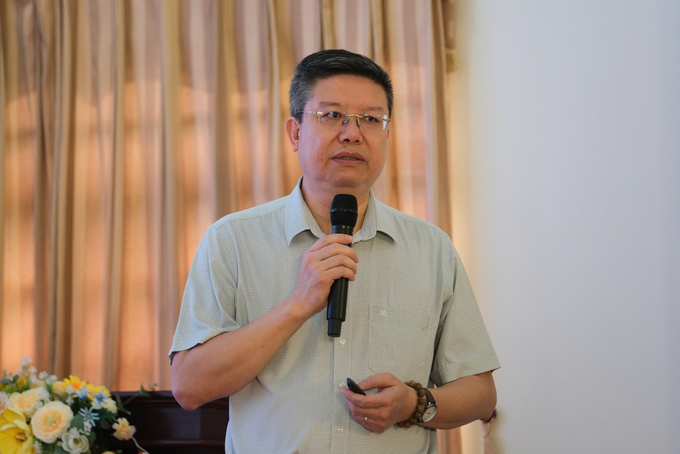
Mr. Le Thanh Hoa: “All stakeholders must comply with Vietnam’s regulations as well as the food safety and disease control requirements of the importing markets during the production process”. Photo: Quynh Chi.
According to the Department of Quality, Processing and Market Development, Vietnam’s tea exports in the first half of 2024 reached a total of 62.000 tons, with a value of 106 million USD. This represents a 28.3% increase in volume and a 30% increase in value compared to the same period in 2023. The average price of exported tea was 1.710 USD/ton, reflecting a 1.3% rise compared to the first half of 2023.
Mr. Le Thanh Hoa explained that different importing countries have their own specific regulations when it comes to tea. He highlighted the case of Pakistan, which, in addition to meeting international standards like Codex and ISO, requires Vietnamese tea exports to have Halal certification. Furthermore, tea shipments must have at least 50% of their original shelf life remaining at the time of import to ensure their quality.
“Pakistan typically adheres to Codex’s guidelines regarding maximum residue limits (MRLs) for pesticides, other contaminants, and food additives. However, one significant difference is that Pakistan does not have an enforcement system for MRLs of pesticides or contaminants in domestically produced food”, Mr. Hoa shared.
The Ministry of Commerce of Pakistan annually updates its list of food additives allowed for import, following the guidance provided by Codex. As a result, export businesses must stay vigilant and regularly monitor these updates to keep abreast of any changes in the regulations, ensuring that their products remain compliant with the latest requirements.
In Taiwan, the Ministry of Health and Welfare (MOHW) is the central government body responsible for overseeing food safety, including the safety of tea products. All laws, regulations, rules, and decrees concerning food safety and quality are governed by Taiwan’s Food Safety and Sanitation Act (FSSA).
Regarding pesticide residues, Taiwan imposes strict maximum residue limits (MRLs) for pesticides in food products, including tea. These limits are calculated based on the weight of the product that reaches the market, and the testing must encompass not only the active ingredients of the pesticides used but also their breakdown products, or metabolites.
“Taiwan does not automatically adopt the Maximum Residue Limits (MRLs) set by Codex as the default standard. Instead, all imported products must undergo inspections at the border”, Mr. Hoa emphasized.
In addition to the hygiene standards regarding contaminants and toxins in food, which have been enforced since 2019, Taiwan also has a detailed and comprehensive set of rules specifically governing food additives. These regulations integrate a combination of current rules and standards that apply to agricultural products, food and beverages.
Taiwan also has three distinct inspection programs for imported goods. The first program is the regular random lot inspection, where 2-10% of the samples from each shipment are selected for testing. The second program is an enhanced random lot inspection, in which 20-50% of the shipment’s samples are tested. Finally, the third program is a full lot inspection, where 100% of the samples from the shipment are tested.
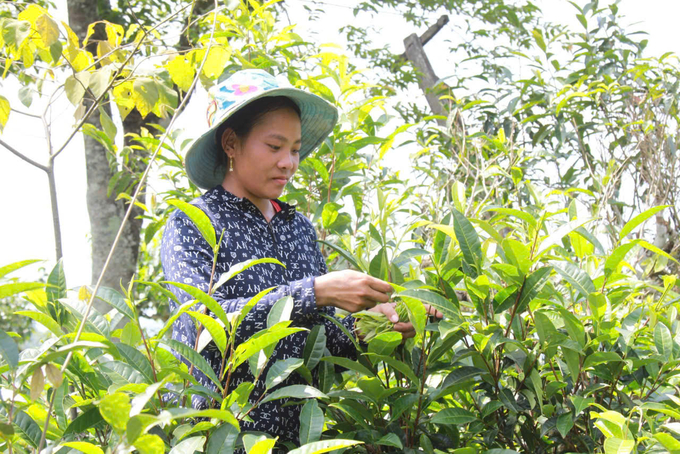
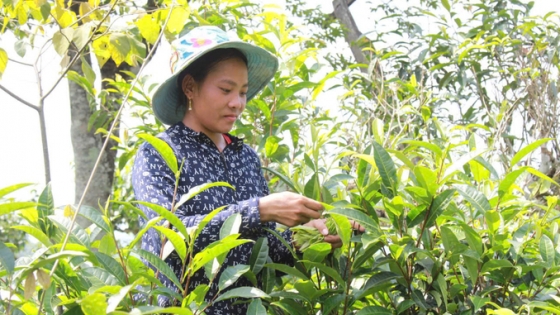
People harvesting tea in Northern Vietnam. Photo: Hoang Anh.
For the Russian Federation, the registration of plant protection products (pesticides) and chemical agents not listed in the specified banned substances list is required. Furthermore, any residues of such chemicals must not exceed permissible limits in or on imported food products. Specific maximum residue limits (MRLs) are established for various substances in tea exports, such as Aldrin, Dieldrin, Hexachlorocyclohexane, and Heptachlor.
In addition, when it comes to the Chinese market, as of 2022, Vietnamese businesses that export agricultural products and food to China must adhere to a range of regulations, including the Import-Export Food Management Measures (Regulation 249) and the Management of Registration of Overseas Food Enterprises for Importing Food into China (Regulation 248), along with agreements signed between the two parties.
“All food production and processing businesses exporting to China are required to register their facilities with the General Administration of Customs of China (GACC), and obtain both product and factory registration codes. Notably, if a company operates multiple factories, each factory must be registered separately, and each registration code will be valid for a period of five years”, emphasized the Director of the SPS Vietnam Office.
As a country with a long tradition of tea consumption, China requires that products made from tea leaves must meet certain quality standards. These products must be free from damage or any off-putting odors, and they should comply with the relevant food safety standards and regulations. Additionally, sensory requirements are strict, meaning the tea must have a normal shape and color, in accordance with the quality standards specified for each type of tea.
Particularly, China’s Food Safety Law enforces strict regulations regarding the use of pesticides. The law also promotes the elimination of highly toxic pesticides with high residue levels, encourages the development and application of alternative products, and advocates for the use of pesticides that are more effective but have low toxicity and minimal residue.
In 2023, China issued further notifications concerning food safety standards, specifically setting maximum residue limits (MRLs) for hundreds of pesticide products used in food.
In recent years, the United States has also become one of the leading importers of Vietnamese tea. The FDA (Food and Drug Administration) is the agency responsible for certifying products that are eligible for export to the U.S., and exporters must ensure that their products comply with the FDA’s stringent standards for food safety and quality.
The FDA requires all facilities involved in the production, processing, packaging, or storage of food, drugs, medical devices, radiological equipment, tobacco, or biological products to be registered with the agency before exporting to the U.S. One of the key requirements for exporters is to implement a food safety system, such as the Hazard Analysis and Critical Control Points (HACCP) system.
Similarly, the European Union (EU) has stringent regulations regarding the use of approved plant protection products (pesticides) in tea cultivation. Residue levels of pesticides are a particular concern for tea imported from Asian countries. In addition to the EU’s regulations, individual buyers, such as those in Germany, may impose even stricter requirements on pesticide residue levels in tea imports.
In general, markets around the world are setting higher and higher standards for food safety, with a particular emphasis on traceability. In addition to these core requirements, major retailers and other buyers, such as importers, may also impose their own specific conditions or additional standards that need to be met.
“All involved parties must strictly adhere to both the regulations set forth by Vietnam and the specific requirements of the importing markets regarding food safety and the prevention of diseases throughout the production process. Additionally, it is essential to carefully study and understand the regulations of each target market, ensuring that the necessary food safety measures are regularly updated”, Mr. Hoa expressed.
Agriculture News | Agri Products Price