


(VAN) According to VIFOREST, the wood industry is focusing on diversifying markets, taking control of the game, and improving quality rather than pursuing volume.
At the conference on promoting agricultural, forestry, and fishery exports in the final months of 2026, held on July 30, Mr. Ngo Sy Hoai, Chairman of the Viet Nam Timber and Forest Product Association (VIFOREST), said that over the past more than 20 years, Viet Nam’s wood industry has consistently maintained annual growth of more than 10%.

Mr. Ngo Sy Hoai, Chairman of the Viet Nam Timber and Forest Product Association. Photo: Nguyen Thuy.
In 2026, as the Government sets a target of double-digit economic growth, the wood industry is also expected to make a significant contribution to the overall agricultural sector’s export turnover. However, in the first seven months of the year, wood exports reached only USD 10.1 billion, up 4.9% from the same period.
According to Mr. Hoai, this growth rate is acceptable compared with the overall performance of the agricultural sector but remains well below the target set by the wood industry. One of the main reasons behind the slowdown in export growth is mounting pressure in the U.S. market.
“The wood industry is facing multiple layers of tariffs as well as trade remedies. Meanwhile, Viet Nam is currently one of the largest suppliers of wood products and furniture to U.S. consumers,” said Mr. Hoai. He noted that the U.S. imports approximately USD 22-24 billion in wood products and furniture each year, with Viet Nam accounting for more than USD 9 billion. This substantial share makes Viet Nam’s wood industry more vulnerable to trade investigations, controls, and remedies.
In the opposite direction, Viet Nam is also sharply increasing its imports of wood materials from the U.S. Import turnover reached around USD 300 million in 2024, rose to more than USD 600 million in 2025, and is projected to reach around USD 900 million in 2026, mainly consisting of logs and sawn timber.
Mr. Hoai said this represents a mutually beneficial trade relationship. The U.S. has abundant forest resources and needs to expand its consumer markets, while Viet Nam has substantial capacity to process and manufacture wood products for export.
“U.S. businesses have repeatedly asked Viet Nam to emphasize the role it plays in consuming the U.S.’s wood materials and consider this an advantage in negotiations on tariff and trade policies between the two countries,” said the Chairman of VIFOREST.
He stressed that, amid unpredictable developments, the wood industry has identified three major directions for transformation: from dependence on a single market to market diversification; from passive response to proactively taking control of the game; and from quantity-driven growth to quality-driven growth.
According to VIFOREST, the industry’s target for 2026 goes beyond USD 17 billion. Businesses are striving to raise the export turnover of wood products to more than USD 18 billion, plus approximately USD 1.2 billion from non-timber forest products.
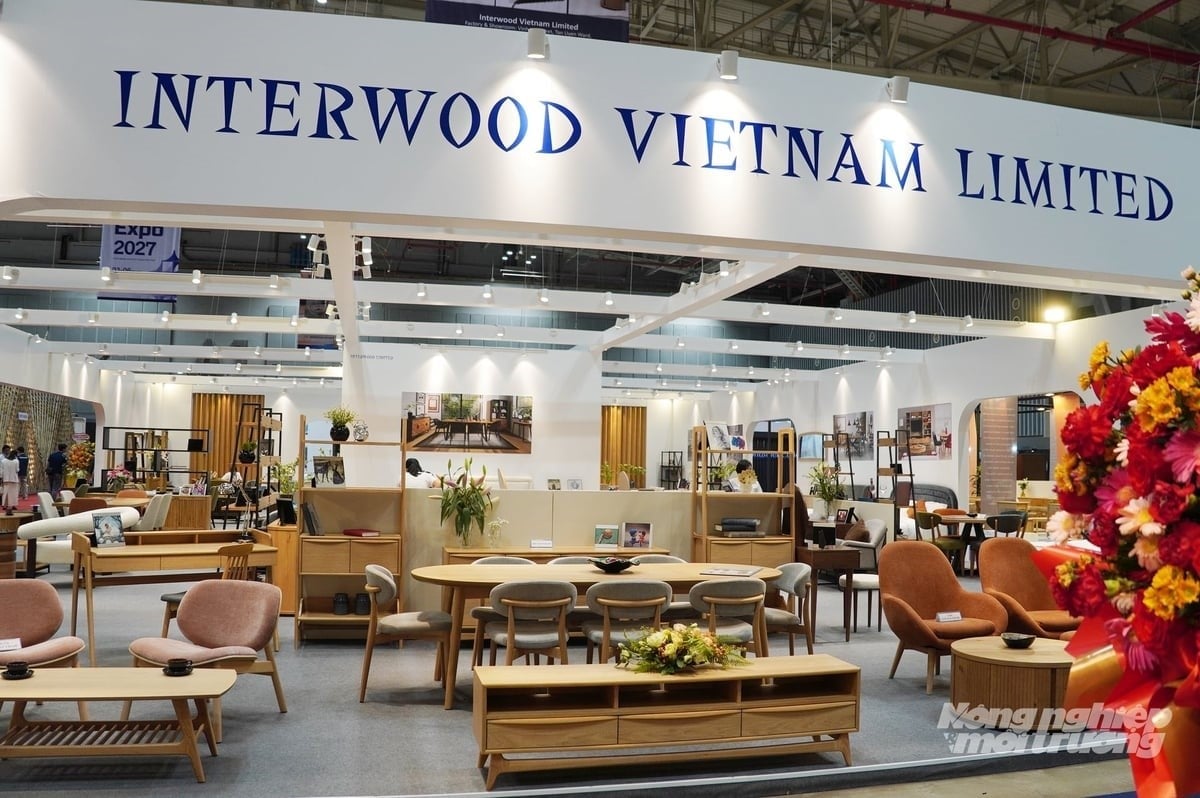
In 2026, the wood industry is expected to continue making a significant contribution to the overall agricultural sector’s export turnover. Photo: Nguyen Thuy.
“If developments in the global market, particularly U.S. tariff policies, are not too unfavorable, total export turnover of wood products and non-timber forest products could reach approximately USD 19.2 billion this year,” stated Mr. Hoai. He added that the wood industry is expected to account for nearly one-third of the agricultural sector’s total export turnover.
According to Mr. Hoai, the wood industry also uses a large proportion of domestically sourced raw materials, creating livelihoods for forest growers and promoting the forestry production and processing chain.
To support businesses in maintaining growth, VIFOREST has proposed that the Government and relevant Ministries and agencies consider eliminating export duties on sawn timber made from imported logs. The unit also called for the removal of the 5% export tax on black pellets.
“If Viet Nam increases imports of logs from the U.S. for sawing, processing, and re-export, it could become a logistics, processing, and distribution hub for U.S. timber in Asia and Southeast Asia. This would enable Vietnamese businesses to become an ‘extended arm’ of the U.S. wood industry, contributing to reducing Viet Nam’s trade surplus with this market,” said Mr. Hoai.
According to the association’s calculations, if the three tax-related obstacles are removed, the wood industry’s export turnover could increase by around USD 500-700 million annually. This would provide a remarkable source of additional growth at a time when businesses are facing mounting pressure from the U.S. market, production costs, and trade remedies.
Chairman of the VIFOREST Ngo Sy Hoai affirmed that the wood industry would continue to pursue its growth targets, protect existing markets, and expand its export space. To achieve these goals, the business community needs the support of the Ministry of Agriculture and Environment, the Ministry of Industry and Trade, and the Ministry of Foreign Affairs, as well as Vietnamese regulatory authorities, trade representatives, and diplomatic missions overseas.
“Wood businesses are committed to not giving up. We will continue to expand into new markets, maintain growth momentum, and safeguard the position we have built in international markets, despite the many challenges ahead,” emphasized the Chairman of VIFOREST.
Agriculture News | Agri Products Price